Shanghai, May 21, 2026 – The tcworld China 2026 technical communication conference officially opened today at the Courtyard by Marriott Shanghai Changfeng Park. At a time when dire predictions of “the death of yet another industry” echo across every sector, technical communication professionals gathered to confront a single, pressing question: where does our profession go from here?
Walking into the venue, this correspondent glanced over the two-day agenda and expected little more than a parade of AI tools and use-case demonstrations. Walking out, however, it became clear just how wrong that assumption was. Far from a mere showcase of technology, the event proved to be a profound dialogue about the very identity and future of our craft—a conversation that resonated deeply with the conference theme, “United by Intelligence, Shaping the New Frontier.”
Day 1’s lineup appeared disjointed on paper: EU ecodesign regulations, simplified English, AI agents, open-source documentation, consumer product documentation—topics that seemed to span the entire spectrum of the field.
Yet beneath the surface, a unifying narrative gradually emerged: documentation professionals are undergoing a rapid transformation—from content producers into knowledge operators. And by all accounts, this transition is unfolding at a pace far more accelerated than most had anticipated.
What follows are several key takeaways from Day 1 that are particularly worth highlighting.
1. Exploring AI Agents for Documentation Delivery
Speaker: Xue Jing (ZTE Corporation, System Product Documentation Director)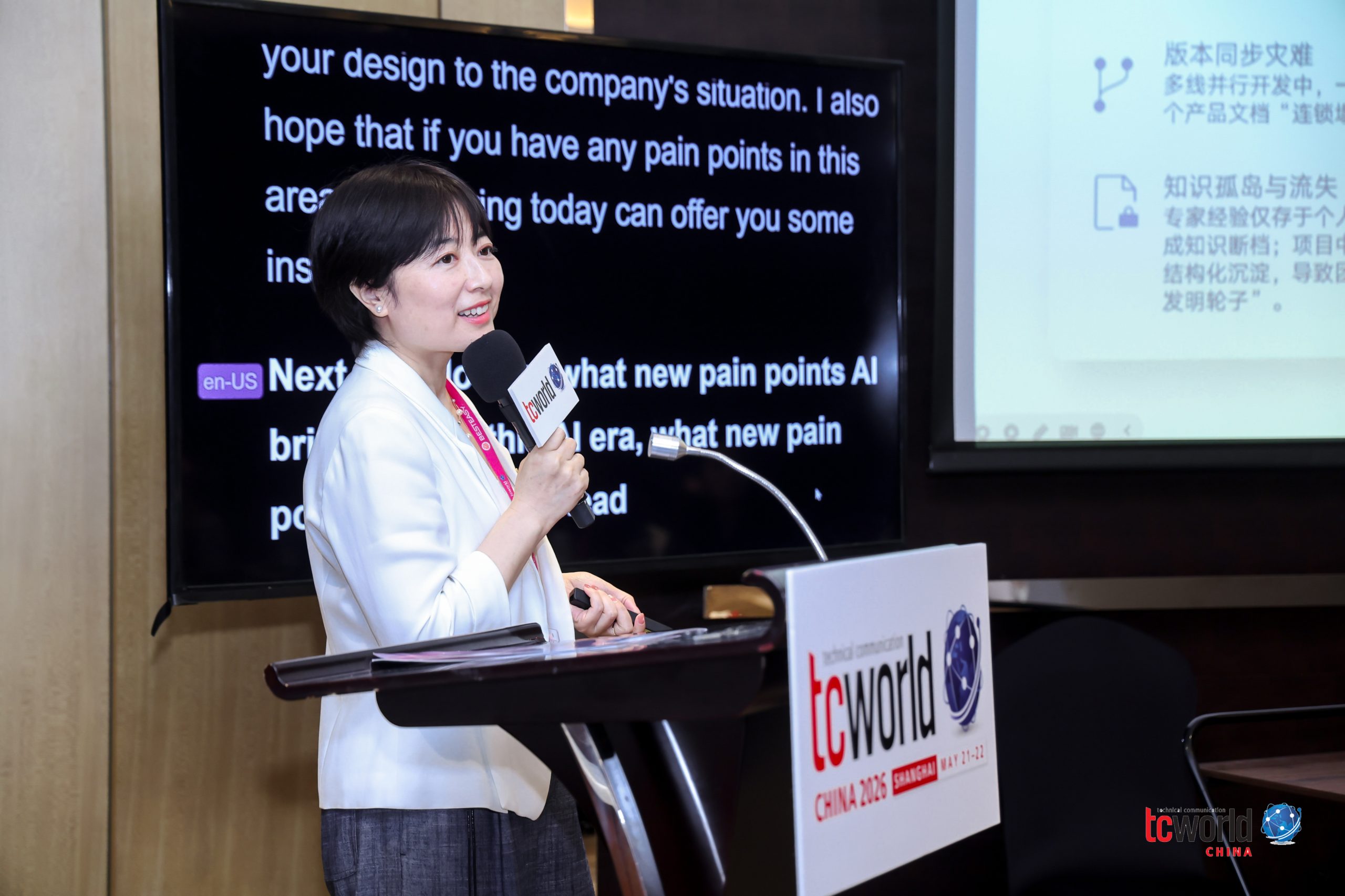
Xue Jing’s presentation began with an overview of AI interaction trends and the pain points inherent in traditional documentation delivery. She categorized AI interaction paradigms into four tiers:
– Q&A (P1): The most basic level, akin to chatGPT, where humans and AI interact outside the workflow.
– Immersive (P2): Similar to a copilot, where AI assists with tasks within existing workflows.
– Process Reengineering (P3): A workspace model where workflows are orchestrated and constructed around AI.
– Symbiotic (P4): End-to-end automated execution.
ZTE’s practical implementation centers on a multi-agent collaborative framework—Planner plus Executors—spanning five stages: planning, execution, quality control, translation, and publication.
What drew the most attention, however, was her articulation of four hallucination-containment techniques for document generation:
– Fact-Checking Agent: Separating generation from verification by cross-referencing every key claim against its original source.
– Context Engineering with Citation Closure: Forcing the model to generate responses “based solely on the provided context” and tagging each piece of information with precise source attribution to prevent fabrication.
– Refusal Mechanism: Training the model to actively decline answering when information is insufficient, rather than inventing plausible but false content.
– End-to-End Evaluation Loop: Establishing an automated evaluation framework covering critical scenarios, with continuous testing across large-scale samples to drive iterative improvements in both models and engineering strategies.
This approach bears a striking resemblance to the “anchor strategy” presented later by Jiang Shiyue from Alibaba Cloud—two speakers from competing companies arriving at a shared conclusion: the core challenge in AI application is not capability, but controllability.
Xue also outlined a three-stage evolution of documentation paradigms:
– Manual authoring
– AI-assisted full-process authoring
– AI-driven full-process authoring
Most teams currently sit between stages one and two. Stage three is the direction of travel, but genuine adoption hinges on solving the controllability problem.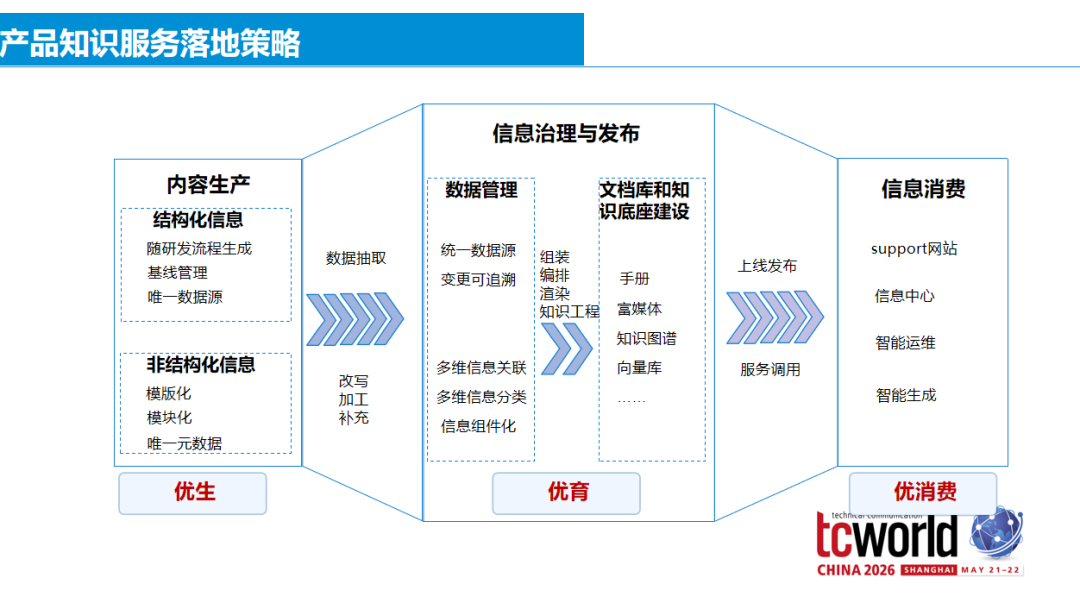
2. AI-Powered Collaborative Open-Source Documentation
Speaker: Fan Yaqing (Huawei, Information Technology Engineer)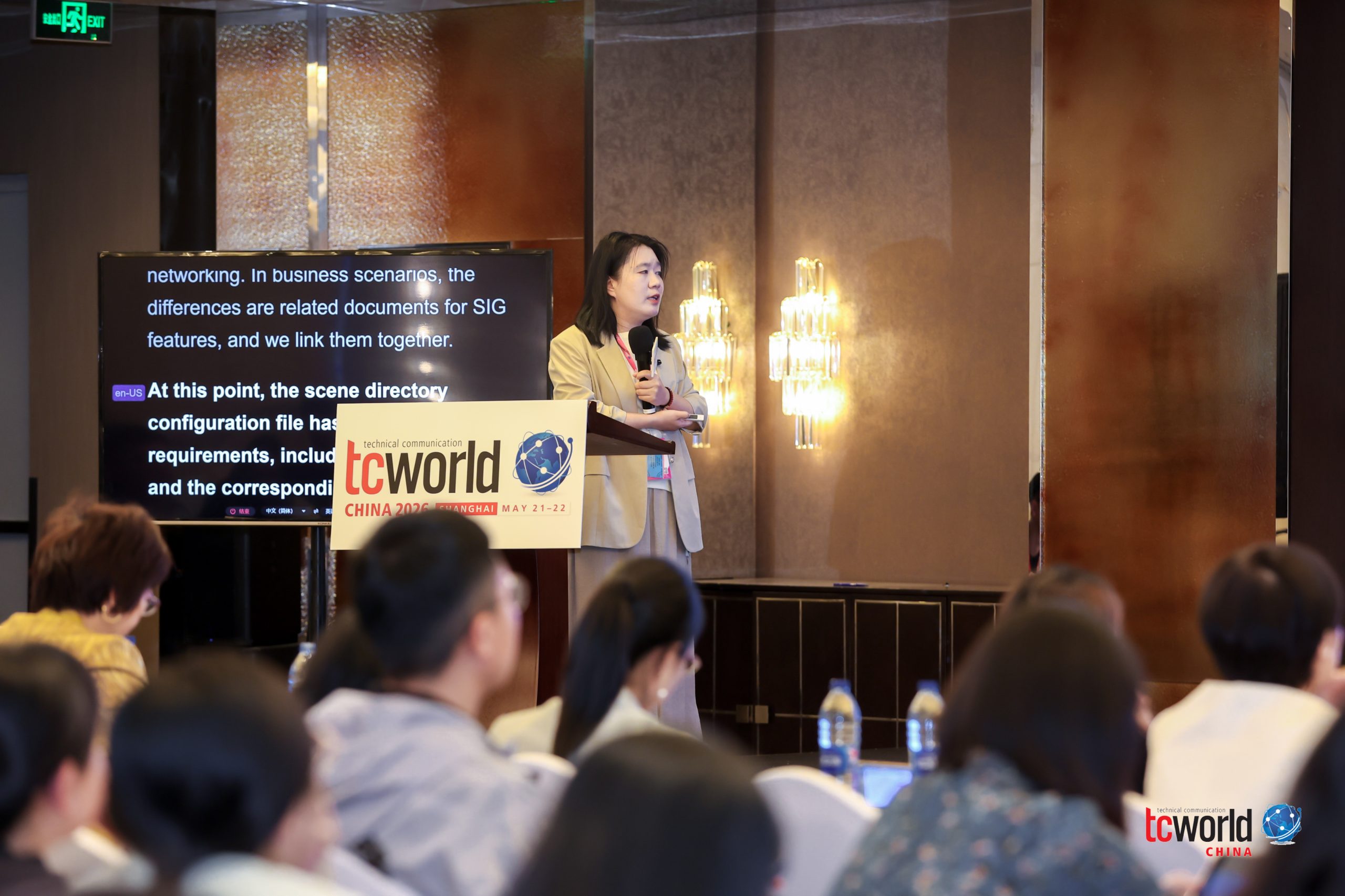
This presentation took a distinctive angle—not “how to use AI to write documents,” but “how to build an open-source documentation system where both AI and humans can contribute efficiently.” Huawei’s practice includes:
– AI-Assisted Table of Contents Generation: Automatically generating _toc.yaml, from existing Markdown files, synchronizing titles, and removing invalid entries.
– VS Code Plugin CANN-ASSIST: Supporting automated API reference documentation generation with built-in writing templates and format requirements.
– VS Code Plugin Doc Tools: Real-time format checking, writing assistance, and preview functionality, integrating writing, proofreading, and review into a single workflow.
The measurable results: a 60% reduction in writing time, with issues identified before PR submission, minimizing rework.
More impressive, however, was the overall design philosophy behind their open-source documentation architecture: structuring document types according to the user journey—Awareness → Initial Use → Deep Engagement → Contribution → Advocacy—with each layer addressing distinct user needs and content standards. The “Awareness” phase, for instance, requires README, release notes, and architecture white papers, while “Initial Use” demands installation guides, user manuals, and API references; the “Contribution” phase, in turn, needs contribution guidelines, coding standards, and PR templates. This framework holds value far beyond open-source projects, offering a reference model for any developer-facing documentation system.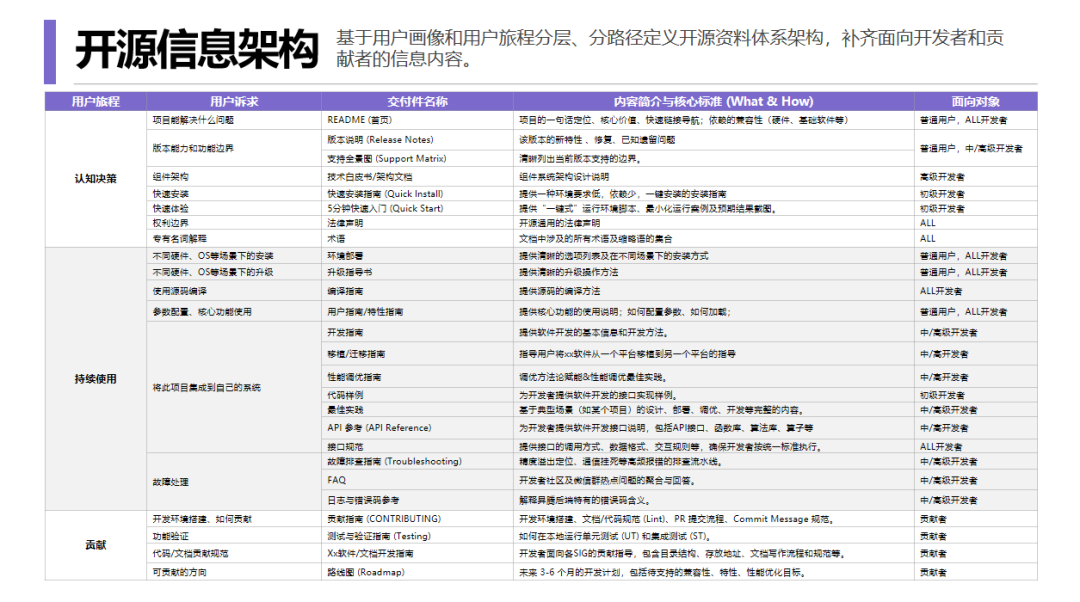
3. Hallucination Is Not Mysticism—It’s an Engineering Problem
Speaker: Jiang Shiyue (Alibaba Cloud, Technical Content Engineer)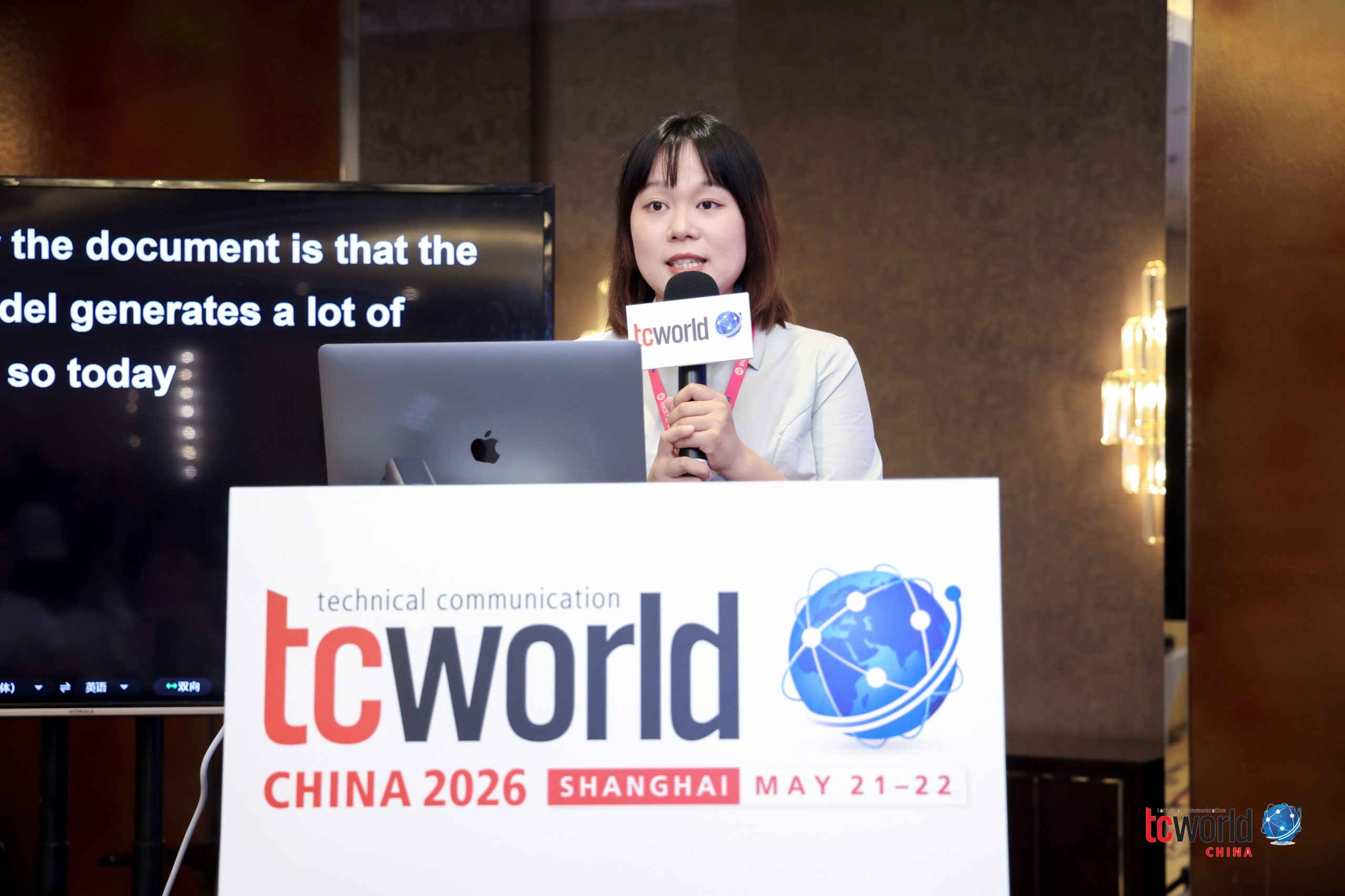
Titled “From Technical Writer to Model-Context Engineer: Exploring Methods to Reduce LLM Hallucinations,” this session sounded academic but delivered eminently practical insights.
Jiang categorized LLM hallucinations in the documentation domain into four types:
– Factual Fabrication: Generating nonexistent parameters or steps.
– Misattribution: Assigning features of Product A to Product B.
– Over-polishing: Producing content that sounds plausible but deviates from source material.
– Logical Inconsistency: Contradictory statements within the same output.
The root cause, she argued, is not that models “aren’t smart enough,” but that they lack real-world anchors.
Her proposed solution is an anchor strategy with hard constraints, implemented across three layers:
– Knowledge Layer: Building an AI-ready knowledge base using Markdown with YAML frontmatter, deduplicated and denoised, to provide reliable “real-world anchors” for the model to reference.
– Generation Layer: Anchor preprocessing combined with hard constraints. The core principle is not letting the model “remember” constraints, but forcing it to “invoke” them through script-enforced execution at every step—constraints that cannot be bypassed.
– Model Layer: Domain-specific fine-tuning combined with preference training (RLHF), optimizing model behavior for specific documentation types.
She also shared a pragmatic framework: different technical document types require different anchor sources:
– Procedural documentation → screenshots, functional steps, cautionary notes
– Reference documentation → parameter databases, product assets
– Developer guides → API definitions, code
– Explanatory documentation → architecture data, PRD documents
This classification system is ready for immediate adoption.
Core insight: The essence of the hallucination problem is “the model improvising in the absence of constraints.” The solution is not better prompts, but stricter engineering constraints.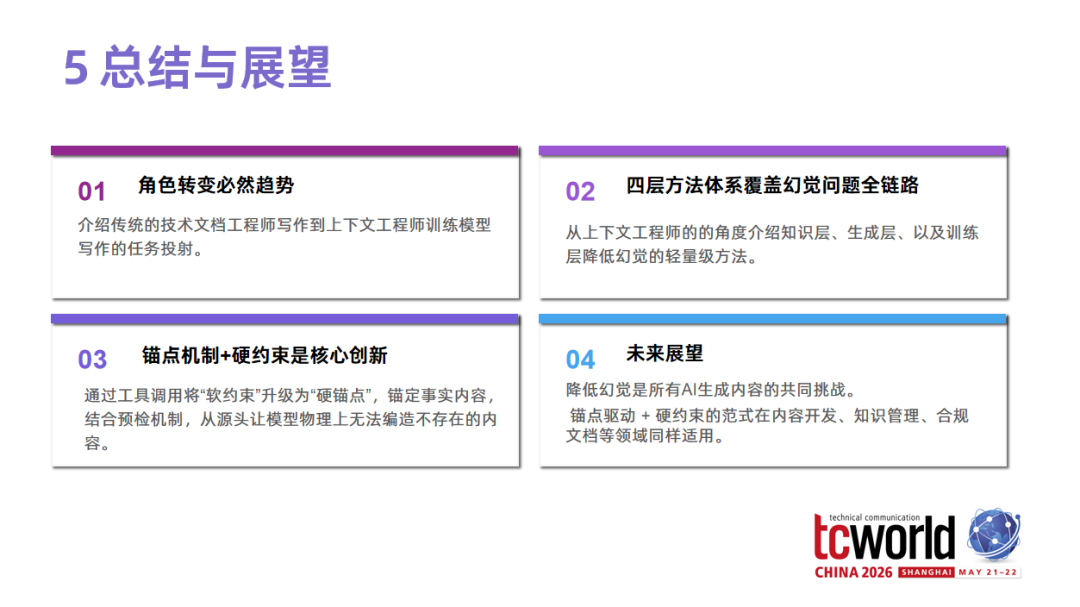
4. SmartBot: When Documentation Evolves from Information Transfer to Task Assistance
Speaker: Elsie Dong (Siemens SEWC Factory, Product Information Engineer)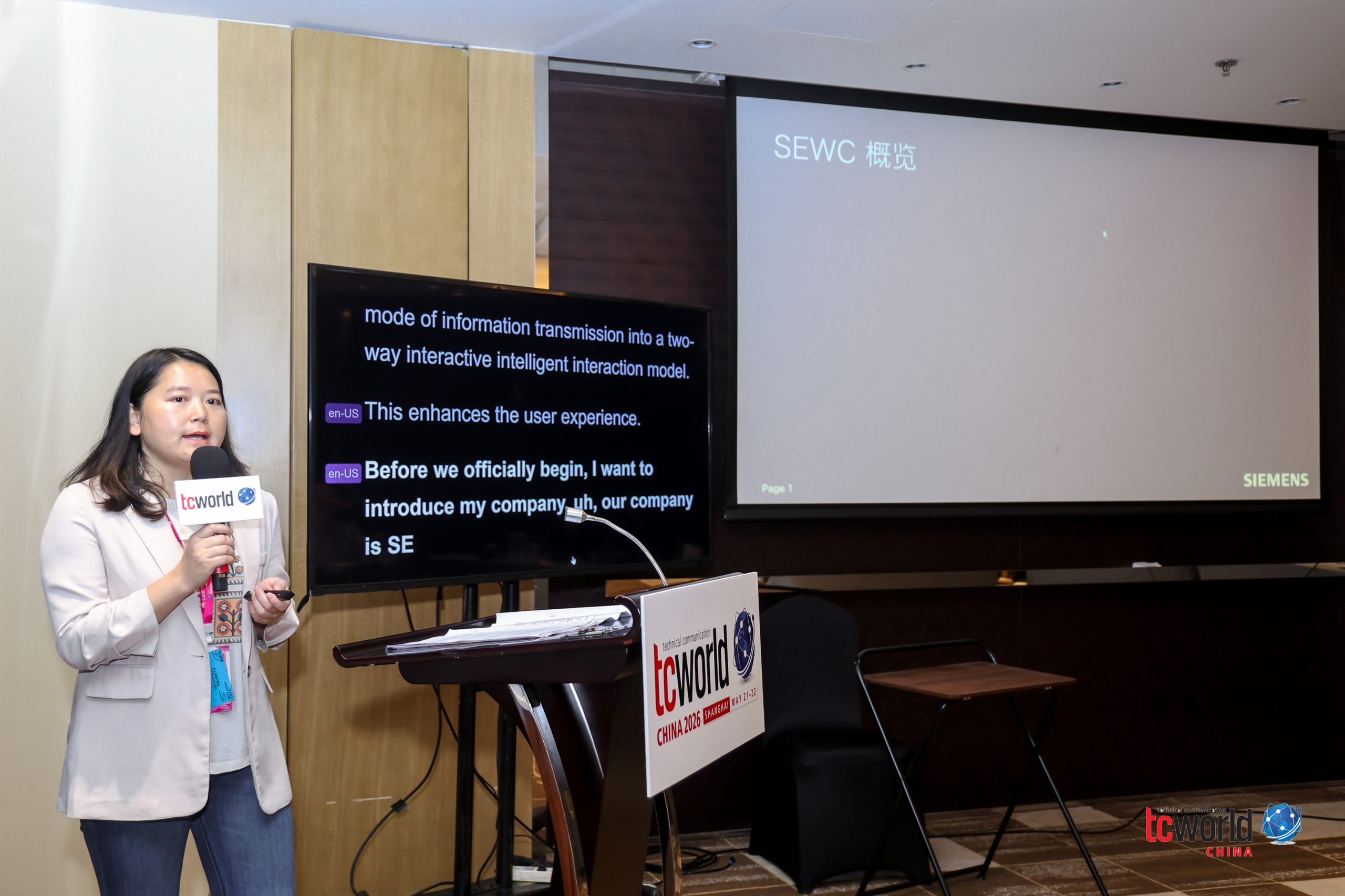
Elsie opened with a sobering statistic: when users encounter a problem, the journey from consulting documentation to comprehension, trial, error, and eventual resolution takes an average of 30 to 65 minutes. The issue is not poorly written documentation, but the delivery model itself—users don’t need “information”; they need “task support.”
Siemens’ product documentation system comprises six document types and 2,000 pages of content, requiring users to navigate multiple documents to find answers. The learning curve for script programming is even steeper, with proficiency in JavaScript syntax and the project object model taking 2–4 weeks.
Siemens’ answer is SmartBot, an AI assistant deeply embedded in the product documentation ecosystem, powered by two collaborative agents:
– Knowledge Base Agent: Rapidly locates information, synthesizes content from multiple documents, and delivers structured answers for configuration, troubleshooting, and case-based queries.
– Programming Agent: Explains code, fixes bugs, and optimizes scripts—automatically identifying control names, invoking object models, and generating collision-detection algorithms.
What stunned this correspondent most was the comparison: the traditional approach required 111 lines of code; SmartBot generates the equivalent from a single sentence describing the requirement.
But Elsie emphasized a crucial caveat—one this correspondent made a point of noting separately:
“AI is assistive, not substitutive. Clear documentation structure, consistent information, and well-defined hierarchies are the prerequisites for AI to be effective.”
This is no platitude. SmartBot’s knowledge sources are user documentation, hotline support documents, and case libraries—if the underlying content is substandard, no AI assistant, however sophisticated, can compensate. Documentation quality sets the ceiling for AI capability—a logic that was reinforced time and again throughout the day.
5. On-Premise AI Proofreading: Data Sovereignty Is No Excuse—It’s a Real Threshold
Speaker: Ján Štefančík (ESET, Senior Documentation Manager)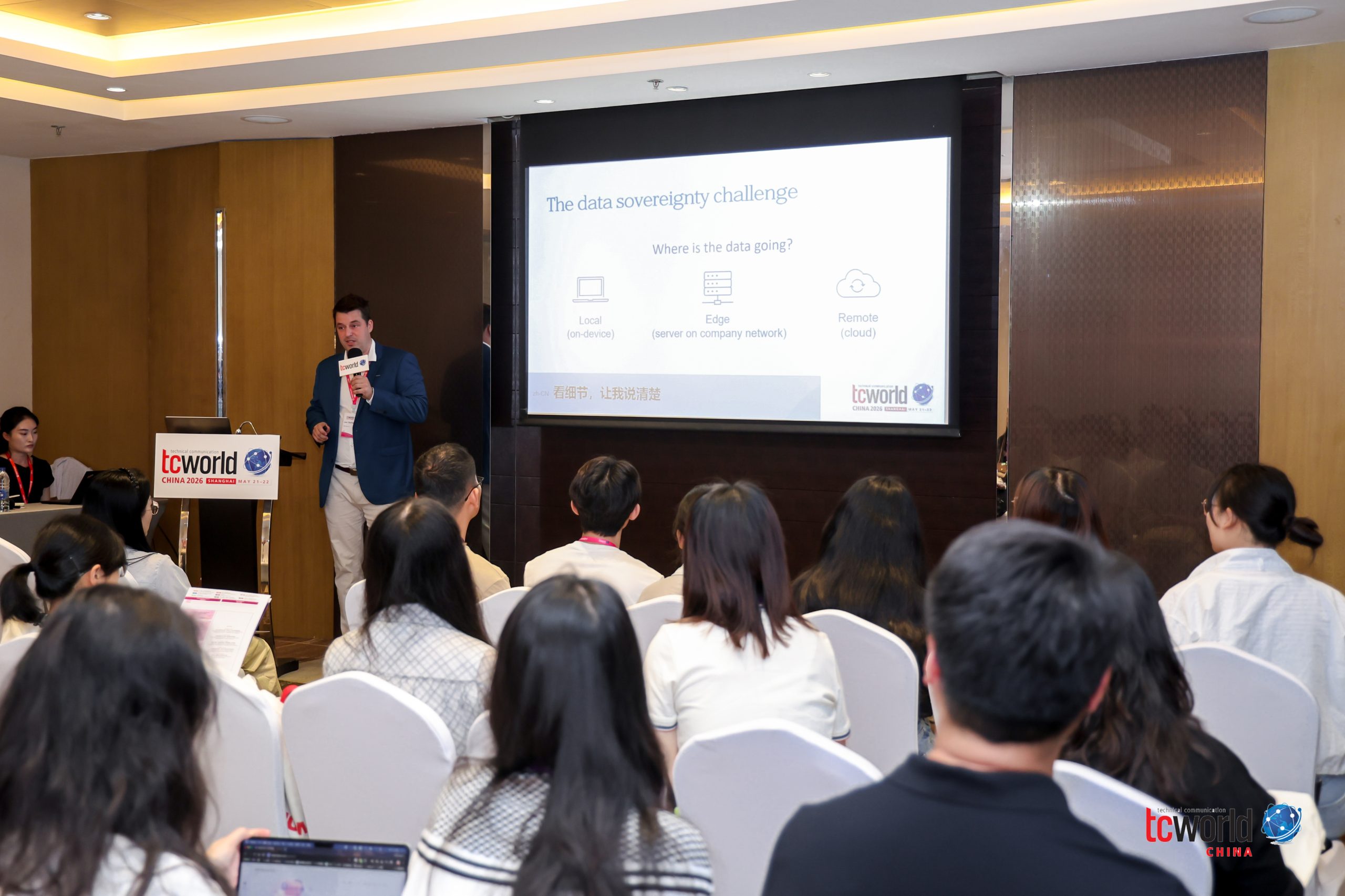
ESET, a European cybersecurity veteran with 30 years of history and 1 billion users, brought a perspective that sounded highly technical—on-premise AI proofreading—but addressed a question many teams prefer to sidestep: where does your documentation data actually reside?
Cloud-based AI proofreading is convenient, but for a security company, sending internal documentation to third-party cloud services carries real and substantial risk.
Ján’s solution: using the Model Context Protocol (MCP) to integrate on-premise small language models into a Docs-as-Code workflow, completing AI proofreading entirely in-house. The architecture is straightforward: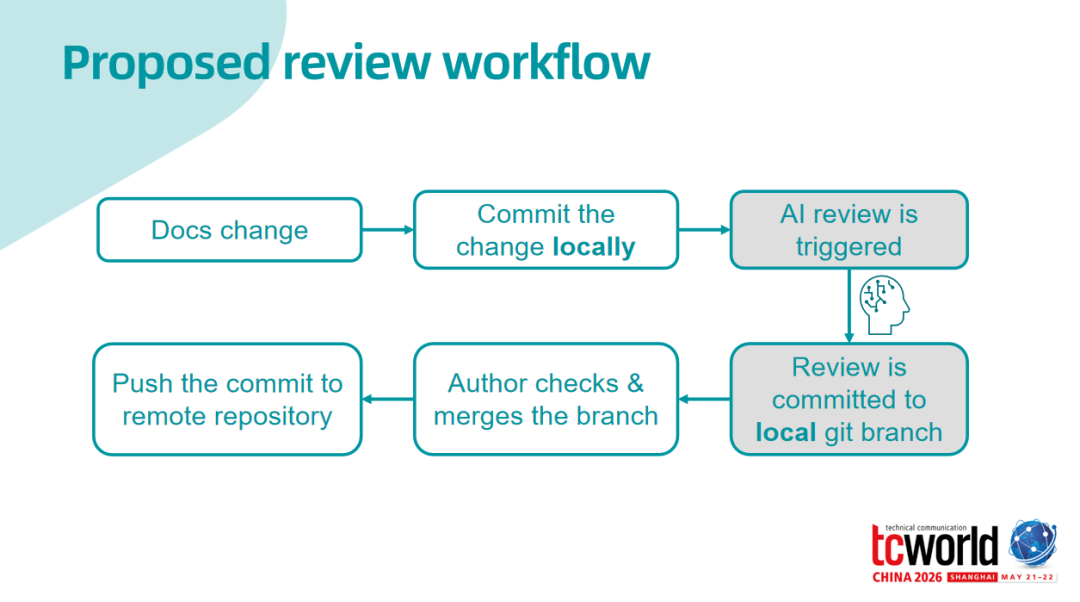
On model selection, Ján offered a pragmatic assessment: small models are more than adequate for routine proofreading; large models are unnecessary. He tested several locally deployable models—Qwen, Gemma, Liquid AI, DeepSeek—emphasizing that the key is selecting a model optimized for your specific language, as tokenizer counts for the same information vary significantly across languages, directly impacting proofreading quality.
He also introduced the concept of Agent Skills: lightweight text files that extend AI agent expertise and workflows. By shifting prompt details to Skill files, the AI determines which Skills to read at the first step, sending only commit diffs rather than entire files—optimizations that dramatically boost on-premise small-model proofreading performance.
Ján also highlighted three future directions he is tracking:
– Dynamic Terminology Injection: Real-time integration of the latest terminology databases into the proofreading process via API, addressing terminology lag—critical for fast-iteration product teams.
– Semantic Guardrails: Using vector databases to establish semantic boundaries, preventing AI from generating content that deviates from the product’s semantic scope—an engineered path to hallucination mitigation that does not rely on manual review.
– Interactive Elicitation: During proofreading, AI proactively queries the author to clarify ambiguous intent via MCP, rather than delivering one-way modification suggestions.
The third direction is particularly intriguing: AI evolves from a “proofreading tool” to a “collaborative partner,” fundamentally reshaping the working methods of technical writers.
6. Bonus Session: Clarity as a Safety Tool
Speaker: Daniela Zambrini (eXeL8, Technical Writer / STE Trainer)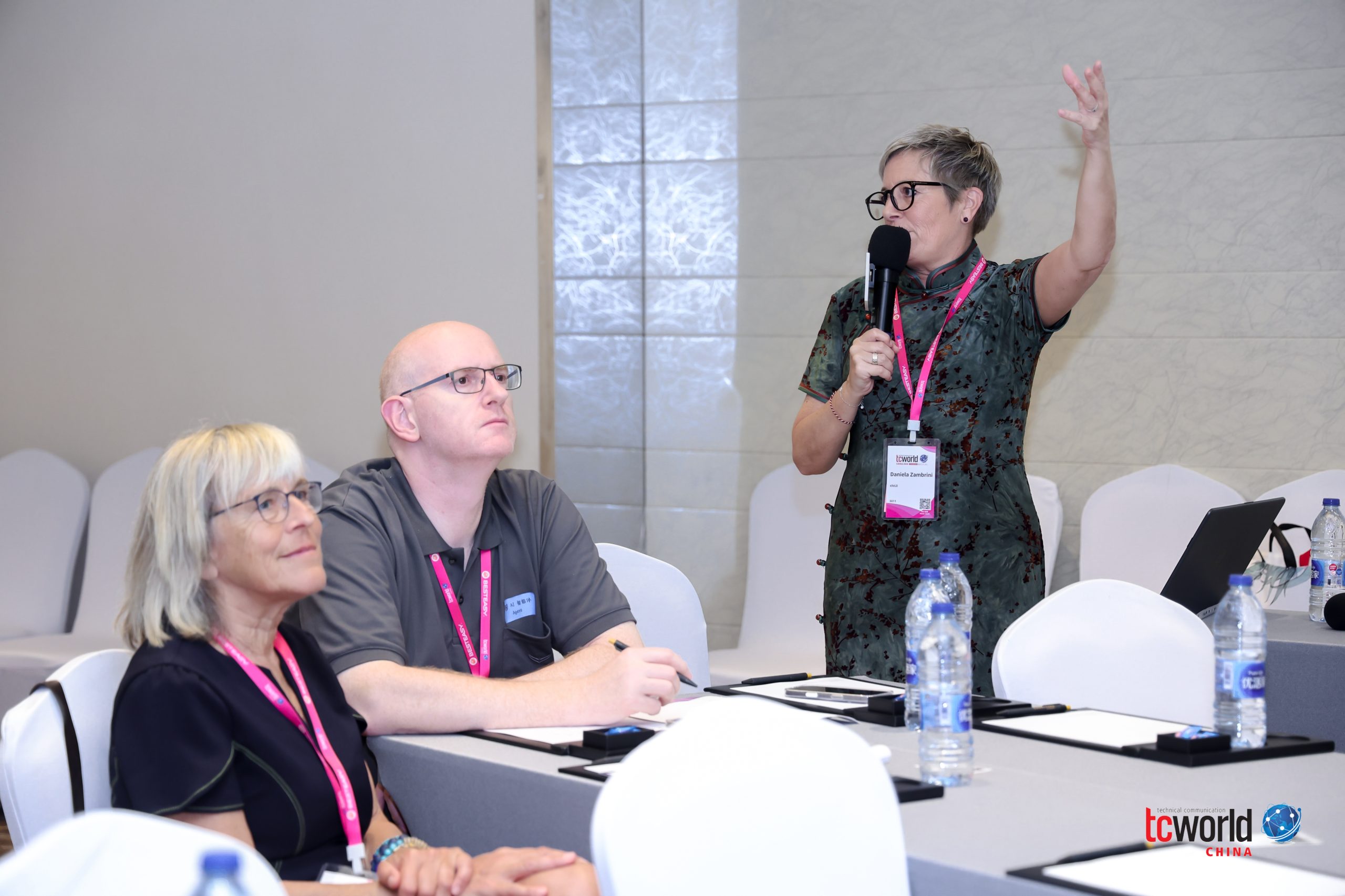
This session had no direct bearing on AI, but it merited separate mention—it served as a timely reminder, amid the AI fervor, that linguistic clarity remains the bedrock of documentation quality.
Daniela addressed ASD-STE100 (Simplified Technical English), a controlled language standard developed for the aerospace and defense industries. She cited a CHIRP Maritime analysis of 45 incident reports, in which documentation-related issues contributed to 20 cases of personal injury.
Her examples were stark:
– “Tighten securely.” — How tight is secure?
– “Install the left clamp.” — Left from whose perspective?
– “Restart the system if necessary.” — What qualifies as necessary?
Under stress, people interpret quickly, and ambiguous language leads to incorrect actions.
STE’s core principle: one word, one part of speech, one meaning. Fifty-three writing rules cover vocabulary selection, sentence structure, procedural writing, and safety instructions.
In the AI age, this standard acquires new significance: content that is structurally clear and semantically unambiguous is not only human-readable but also a prerequisite for AI systems to correctly understand and invoke it.
Day 1: Three Overarching Themes
When the day’s presentations are viewed together, three interconnected threads emerge:
Thread One: Content Engineering Is the Prerequisite for AI Adoption
Whether in SmartBot, on-premise proofreading, or hallucination control, the underlying requirement is the same: structured content, clean metadata, and traceable knowledge sources. Without this foundation, the most powerful AI tools remain castles in the air.
Thread Two: Controllability Outweighs Capability
Both Xue Jing and Jiang Shiyue drove home the same point: the challenge with AI agents is not “whether they can,” but “whether they can be governed.” Hard constraints, anchor strategies, fact-checking—these are all about adding guardrails to AI, not granting it more freedom.
Thread Three: The Technical Writer’s Role Is Shifting Toward Engineering
From “writing documents” to “building knowledge architectures that enable AI to correctly understand and invoke content”; from “proofreading content” to “training and managing models”—this shift is not a future prospect, but a present reality.
In the AI era, rather than worrying about being replaced, start today by learning to work alongside AI,
Where to Begin:
– Audit your existing documentation for “AI readability”: assess structural completeness, metadata coverage, and terminology consistency.
– Pilot on-premise AI proofreading in a specific use case: follow ESET’s architecture, starting with a minimal-viable Docs-as-Code plus local model setup—keeping data within the internal network.
– Develop engineering awareness around hallucination control: move beyond soft prompt constraints to design enforceable anchoring mechanisms.
– Track the Skills/MCP ecosystem: it is rapidly becoming the standard protocol for integrating AI with workflows—worth getting ahead of.
More Highlights: A Virtual Tour of the Conference
Day 1 offered far more than the sessions covered above—this correspondent wishes there were more hours to attend every presentation. For a complete picture, the full Day 1 program is as follows: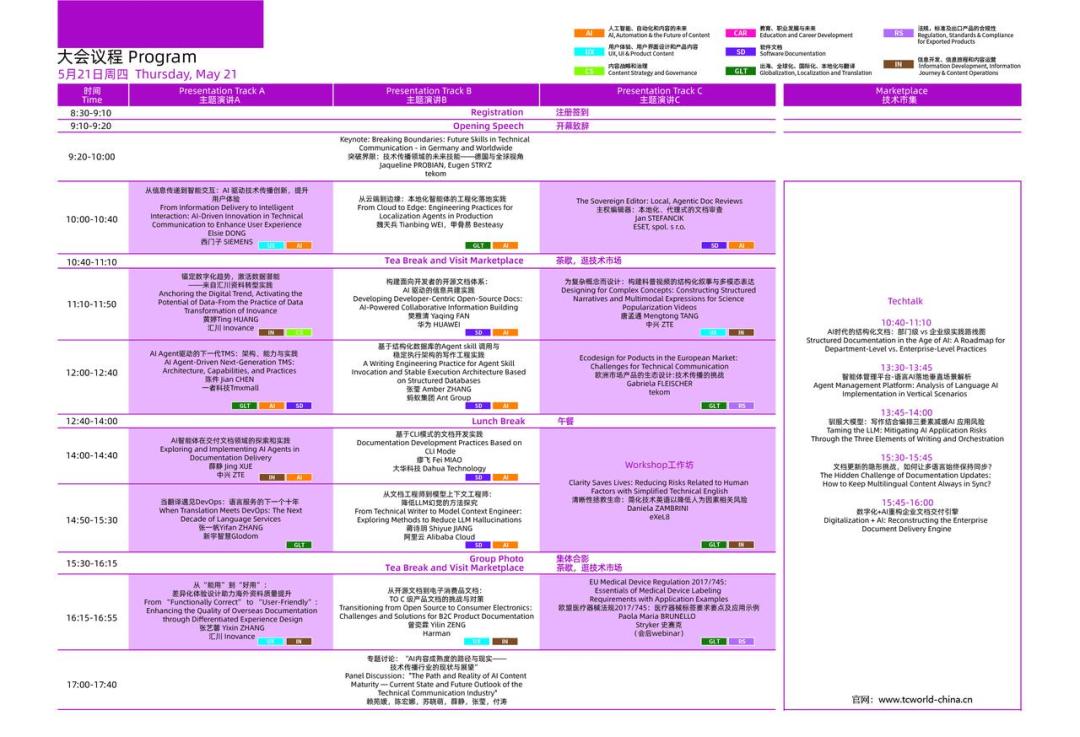
The onsite atmosphere was electric. The morning registration desk saw volunteers busily assisting attendees with check-in and materials collection.
“United by Intelligence, Shaping the New Frontier”—the conference’s main stage backdrop was, as always, a popular photo spot.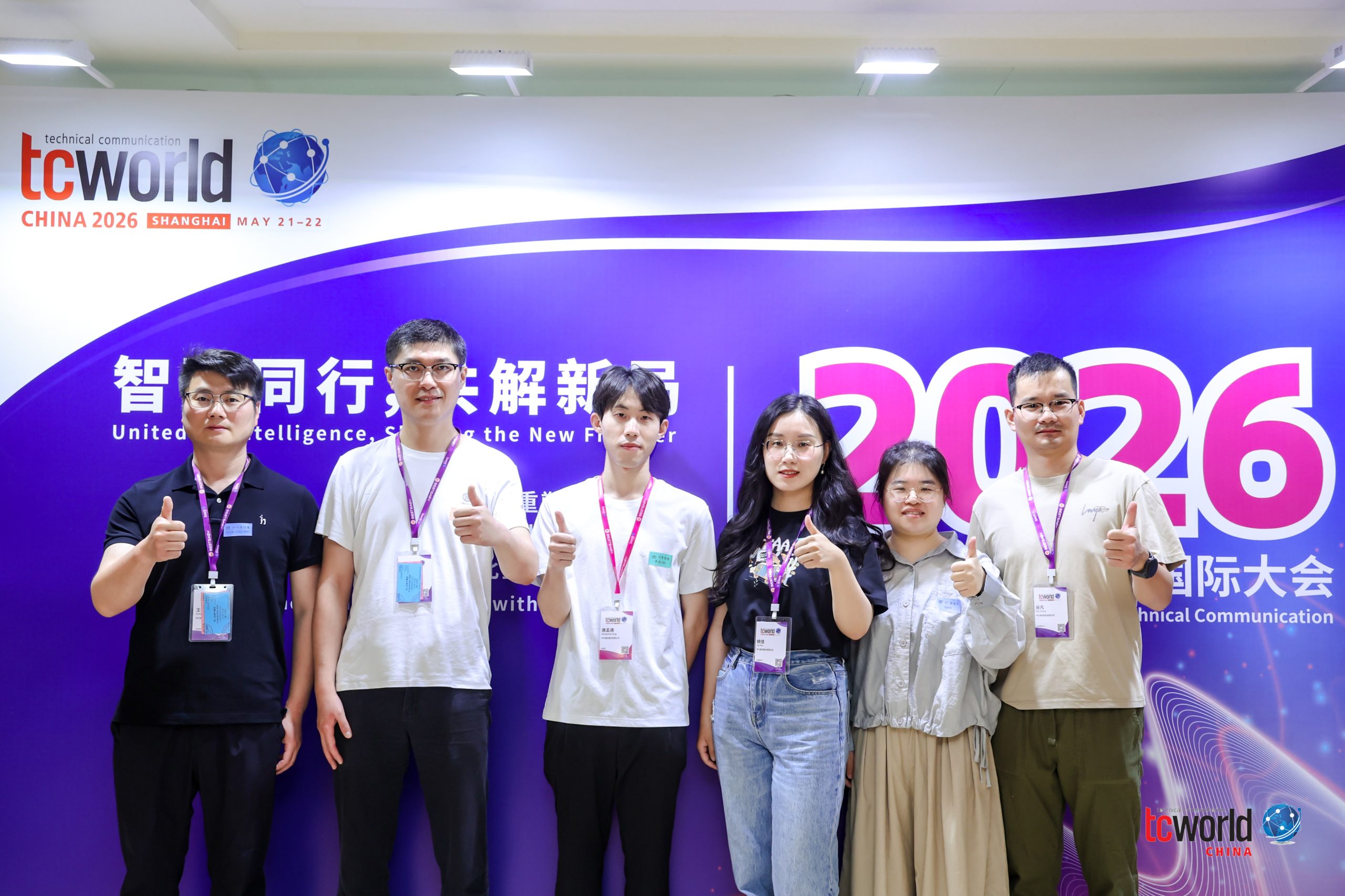
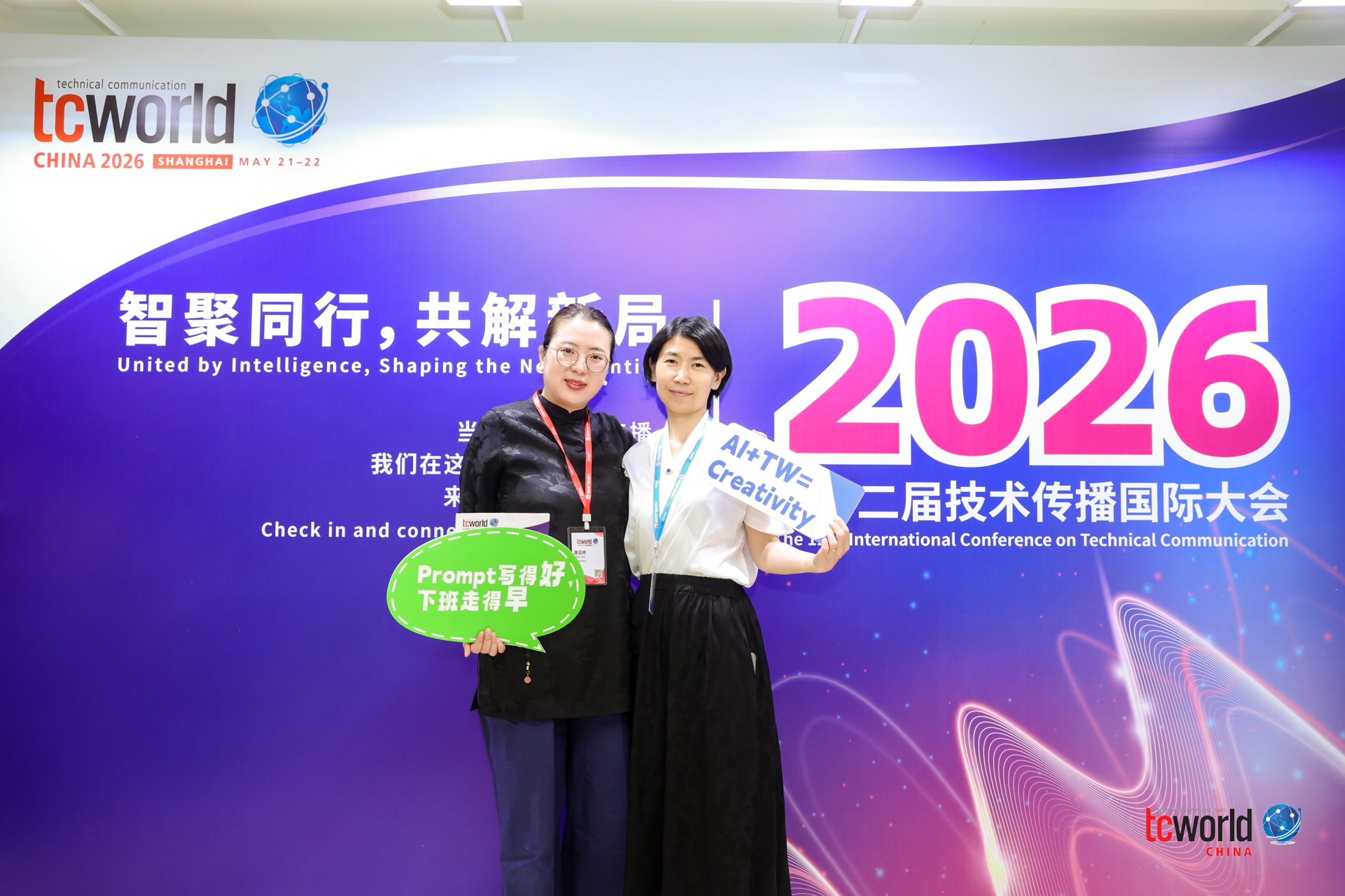
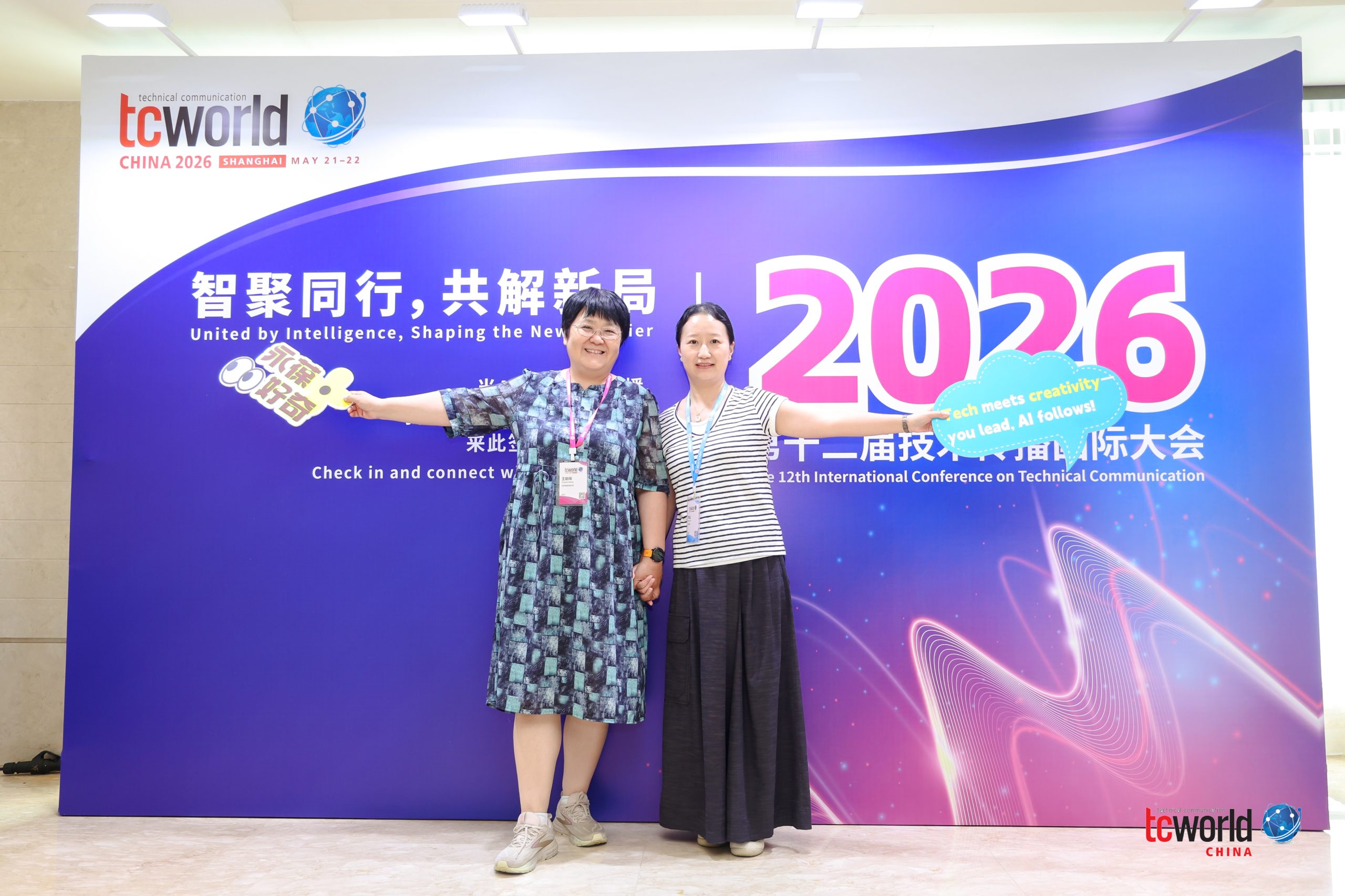
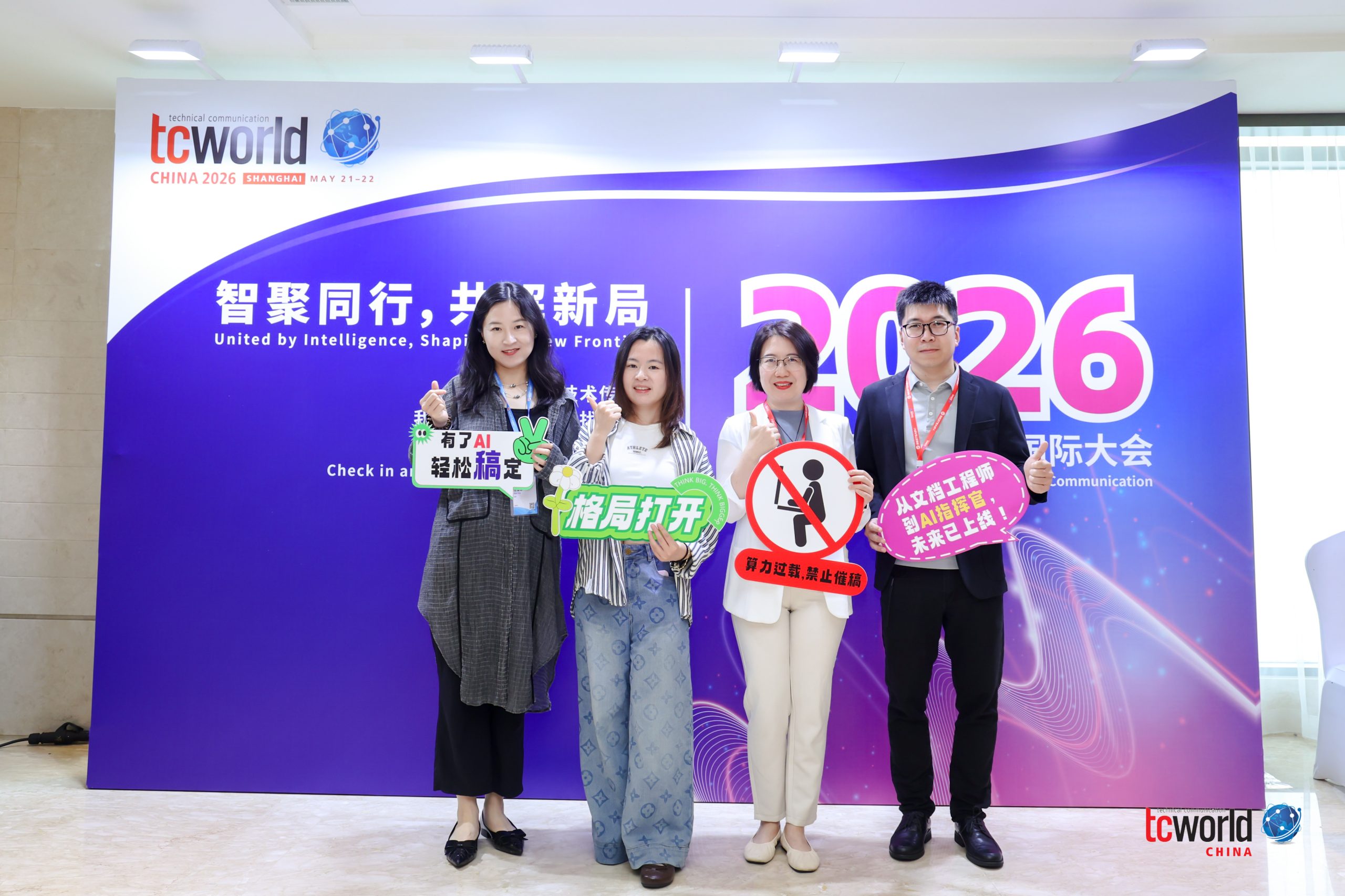
Tang Yuting, a core member of the tcworld China organizing committee, joined tekom CEO Michael Fritz for the opening address, officially launching the conference.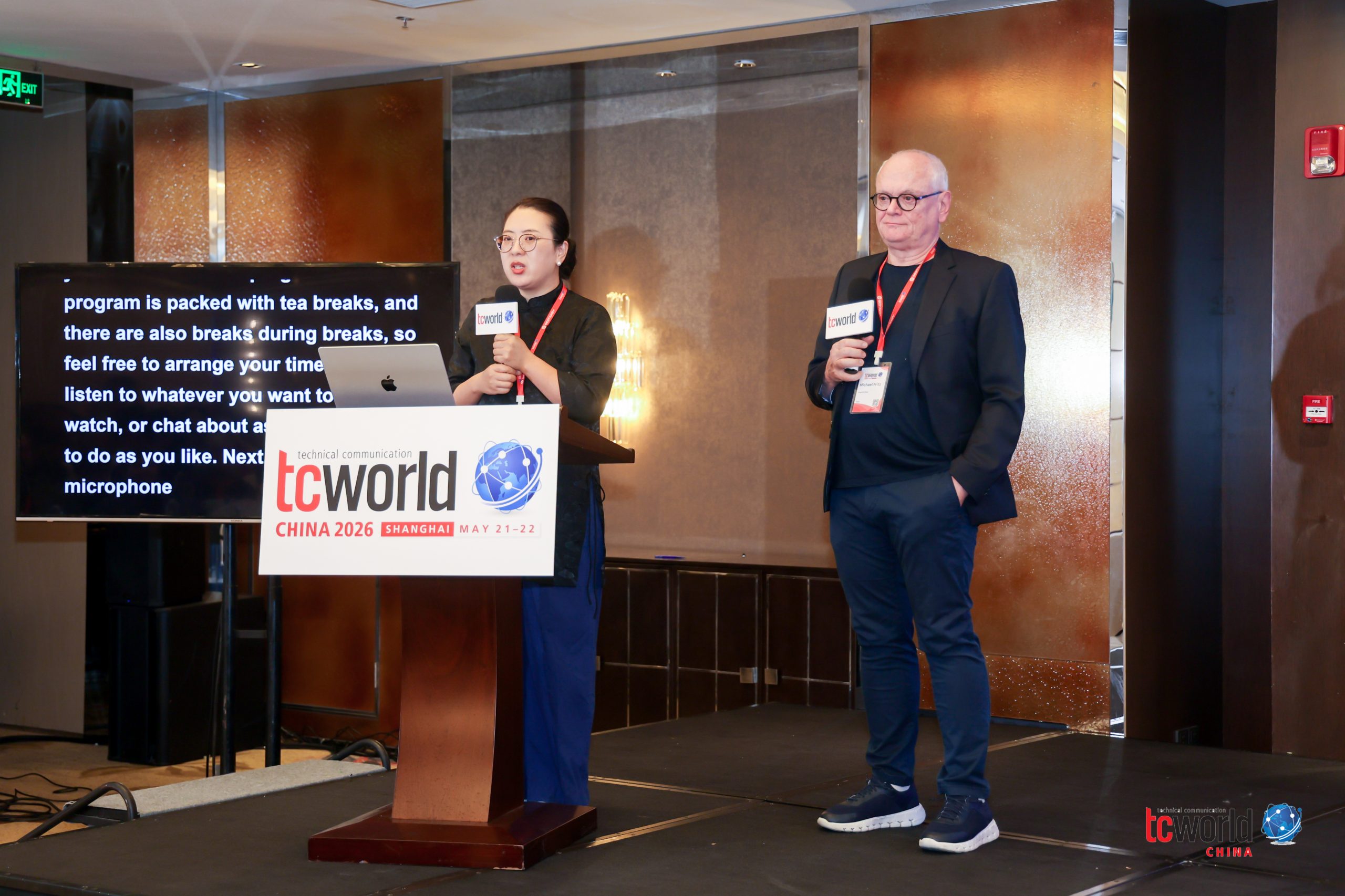
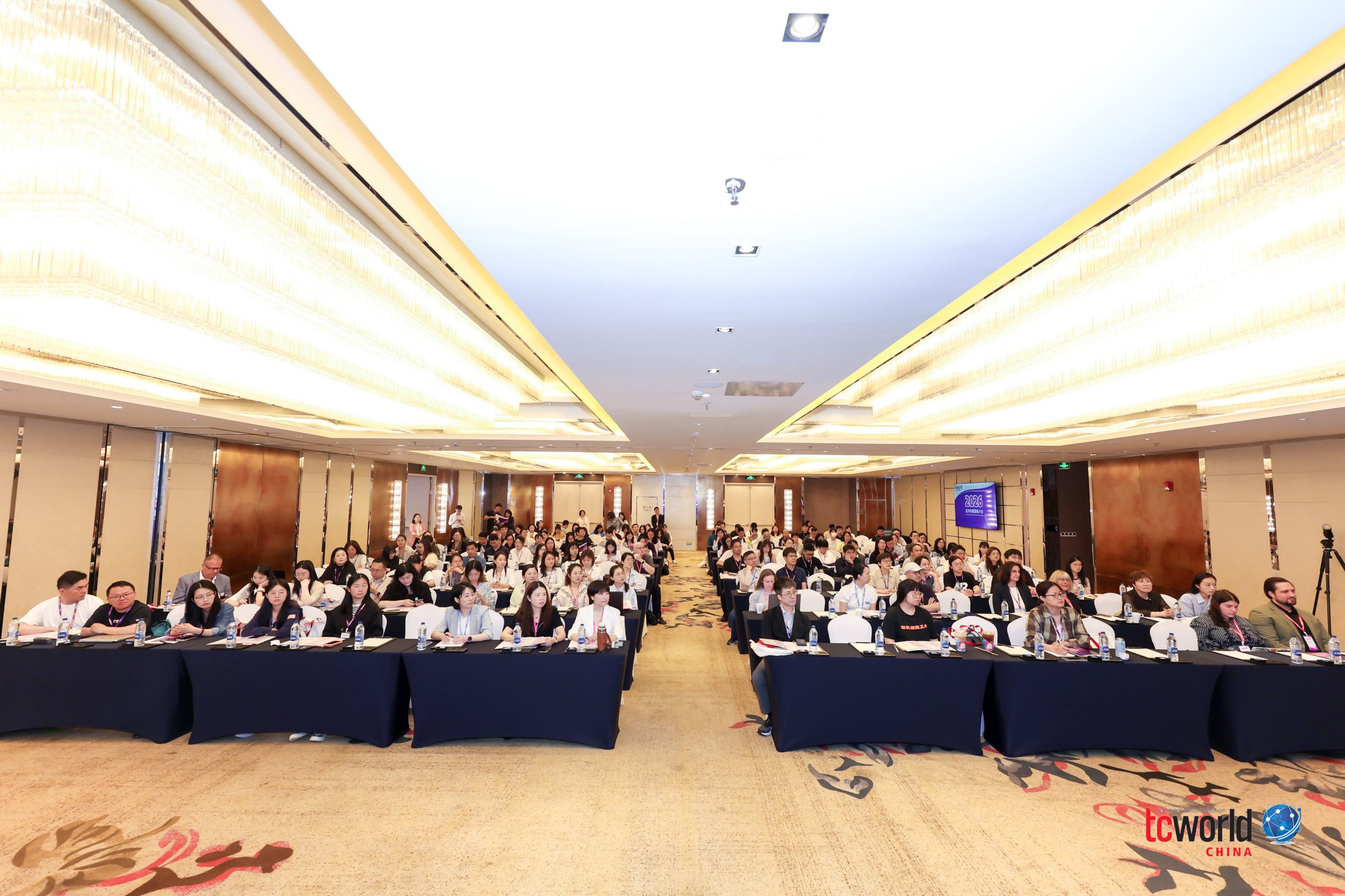
New this year was the “TC Inspiration Garden”—a space for venting frustration and sparking ideas alike, welcoming all.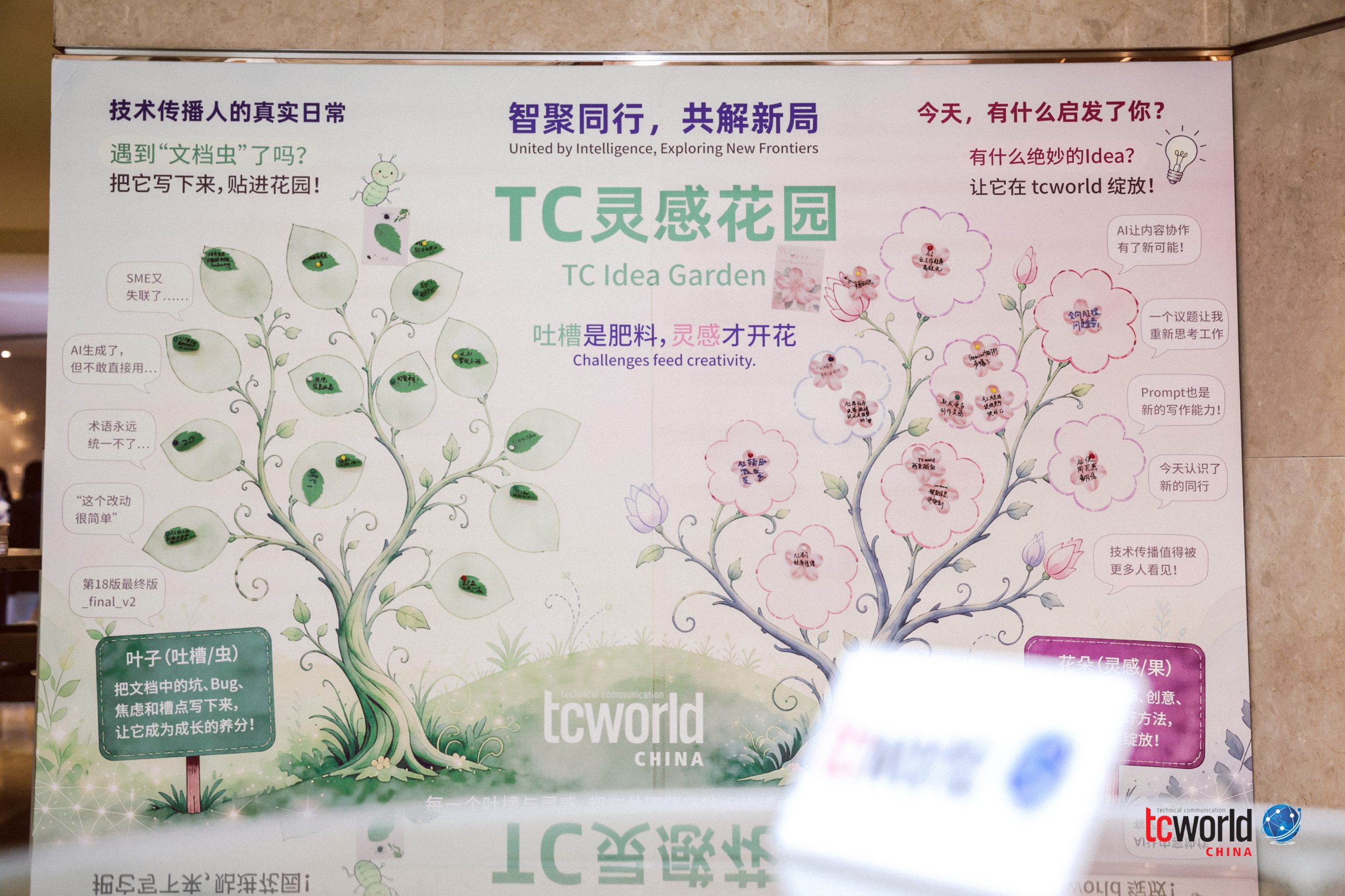
During tea breaks, conversations continued and ideas flowed uninterrupted.
Finally, sincere thanks to Lan-Bridge for providing professional, high-quality simultaneous interpretation and captioning support throughout the conference, ensuring smooth and successful proceedings.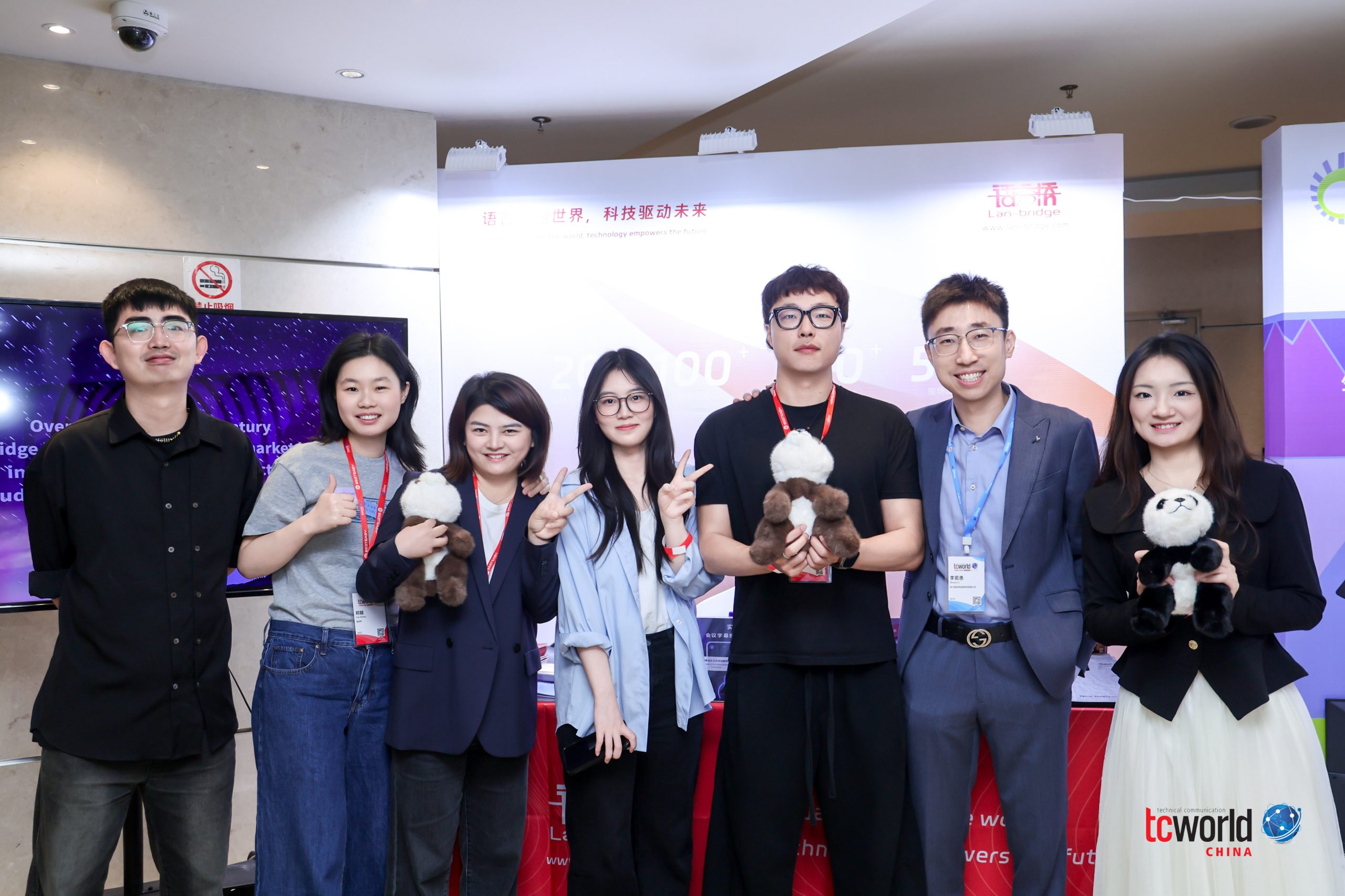
If Day 1 was about “what AI can do,” Day 2 was about “what exactly we should do.” Today’s speakers came from Sungrow, Huawei Cloud, Rolls-Royce, United Imaging Healthcare, ZTE, and beyond—diverse backgrounds, all converging on the same question: how does a real-world technical communication team progress, step by step, toward an AI-native state?
The answer is not buying a tool. Nor is it swapping out a process. It is a systemic overhaul of working methods, role definitions, and organizational capabilities.
1. The Underlying Logic of Content Strategy Has Fundamentally Shifted
Speaker: Huang Min (Sungrow, Information Development Manager)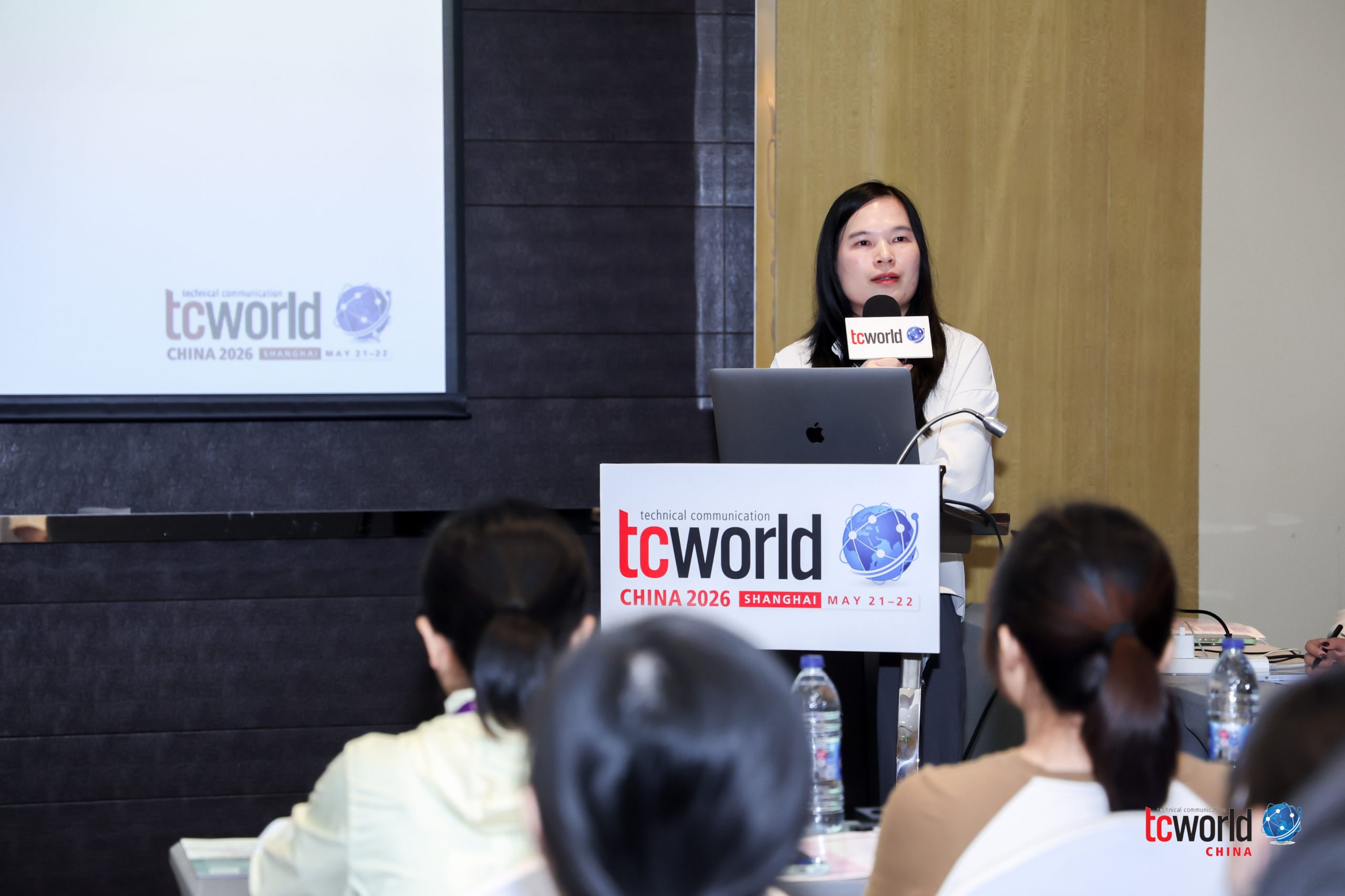
Huang Min opened with a classic definition: “Content strategy means getting the right content, to the right people, in the right place, at the right time.” — Kristina Halvorson. The definition remains valid. But in the AI era, the agents and pathways for fulfilling it have changed completely.
In the past, those four “Rights” relied on human judgment: the technical writer decided what to write, how deep to go, which format to use, and where to publish.
Now, those decisions are increasingly made by AI models and underlying knowledge architectures—models that retrieve content based on user intent, generate responses, and dynamically adapt to channels.
She offered a sharp comparison:
– Right Content: Previously—accurate, complete, logical content in long-form documents for human reading. Now—structured content, atomic knowledge units, text-converted diagrams, optimized for AI comprehension.
– Right People: Previously—technical sales manually assessing customer types and selecting materials to send. Now—metadata tagging of model, version, user, and scenario, allowing AI to match automatically.
– Right Place: Previously—official websites, product manuals, sales material repositories. Now—AI knowledge base integration, tool-chain embedding, RAG.
– Right Time: Previously—sending bid documents when customers tender. Now—version management, knowledge base update strategies, AI response feedback.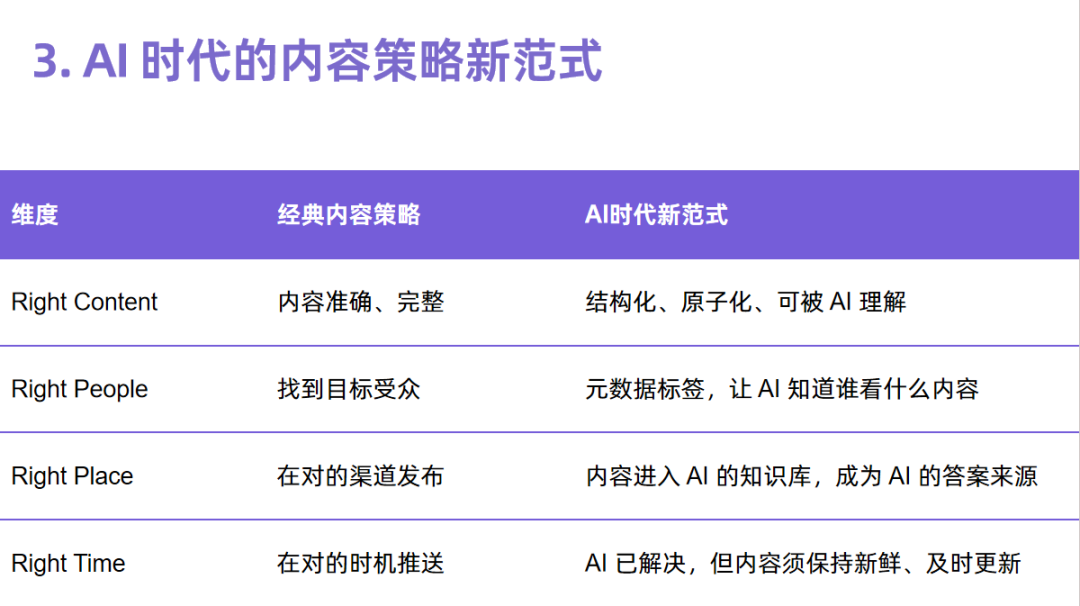
Her conclusion: the core work of technical writers is shifting from “content producer” to “knowledge architect.” Structured content + metadata + knowledge base management form the new triangle of AI-era content strategy.
For practitioners, the implication is straightforward: the time you spend on “writing” should now be matched—or exceeded—by time spent on “architecture.”
2. The Knowledge Flywheel: Documentation Quality Is the Ceiling for AI Assistants
Speaker: Su Xiaomeng (Huawei Cloud, Senior Information Experience Engineer)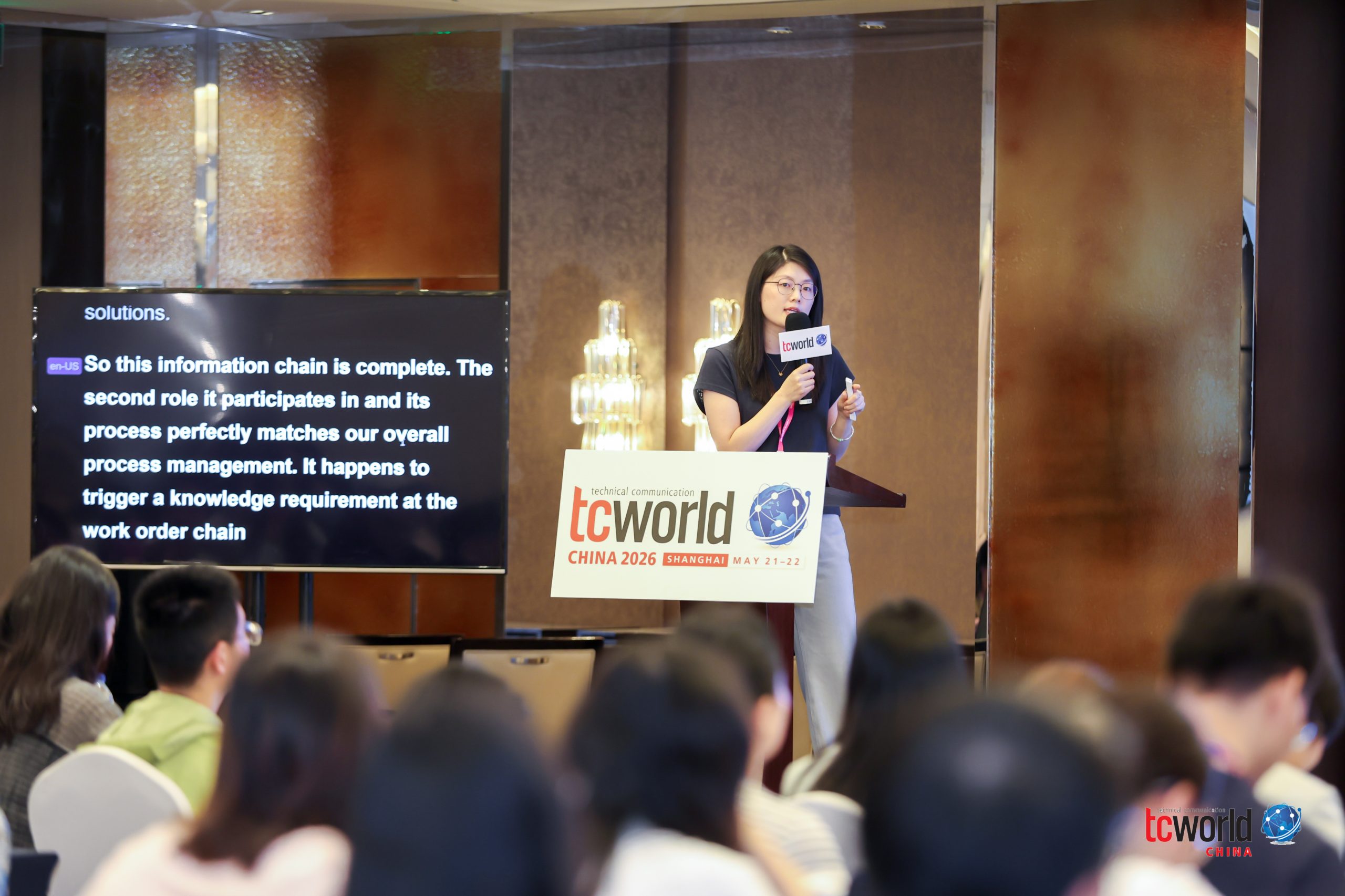
This presentation started from a real-world enterprise pain point: the fundamental challenge facing traditional knowledge management systems in the AI era—knowledge is static, but user needs are dynamic.
Su outlined three core pain points:
Huawei Cloud’s solution is a knowledge flywheel with upgrades across three dimensions:
The efficiency gains are tangible: ticket analysis optimized from 3 person-days per 1,000 tickets to 1 hour per 1,000 tickets.
But what left the deepest impression was the slide title:
“AI-Consumed Documentation: Documentation Quality Improvement Drives Continuous Improvement in Cloud Assistant Metrics.”
Huawei Cloud’s data shows that through knowledge templatization, quality enhancement, and continuous Bad Case analysis, the Cloud Assistant’s problem self-resolution rate, answer accuracy, and knowledge completeness have all risen steadily.
This validates a critical hypothesis: documentation quality is the ceiling for AI assistant capability. How good your knowledge base is—that’s how good your AI assistant will be.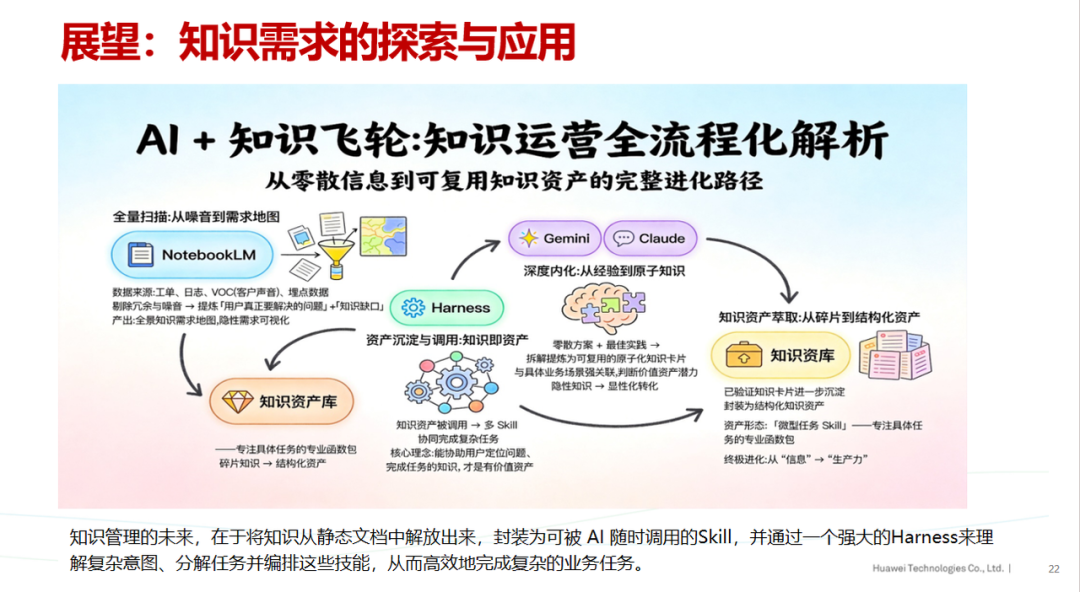
3. The Six Faces of LLM Hallucination
Speaker: Thomas Schmidhuber (Rolls-Royce Solutions GmbH, Senior Digital Transformation Manager)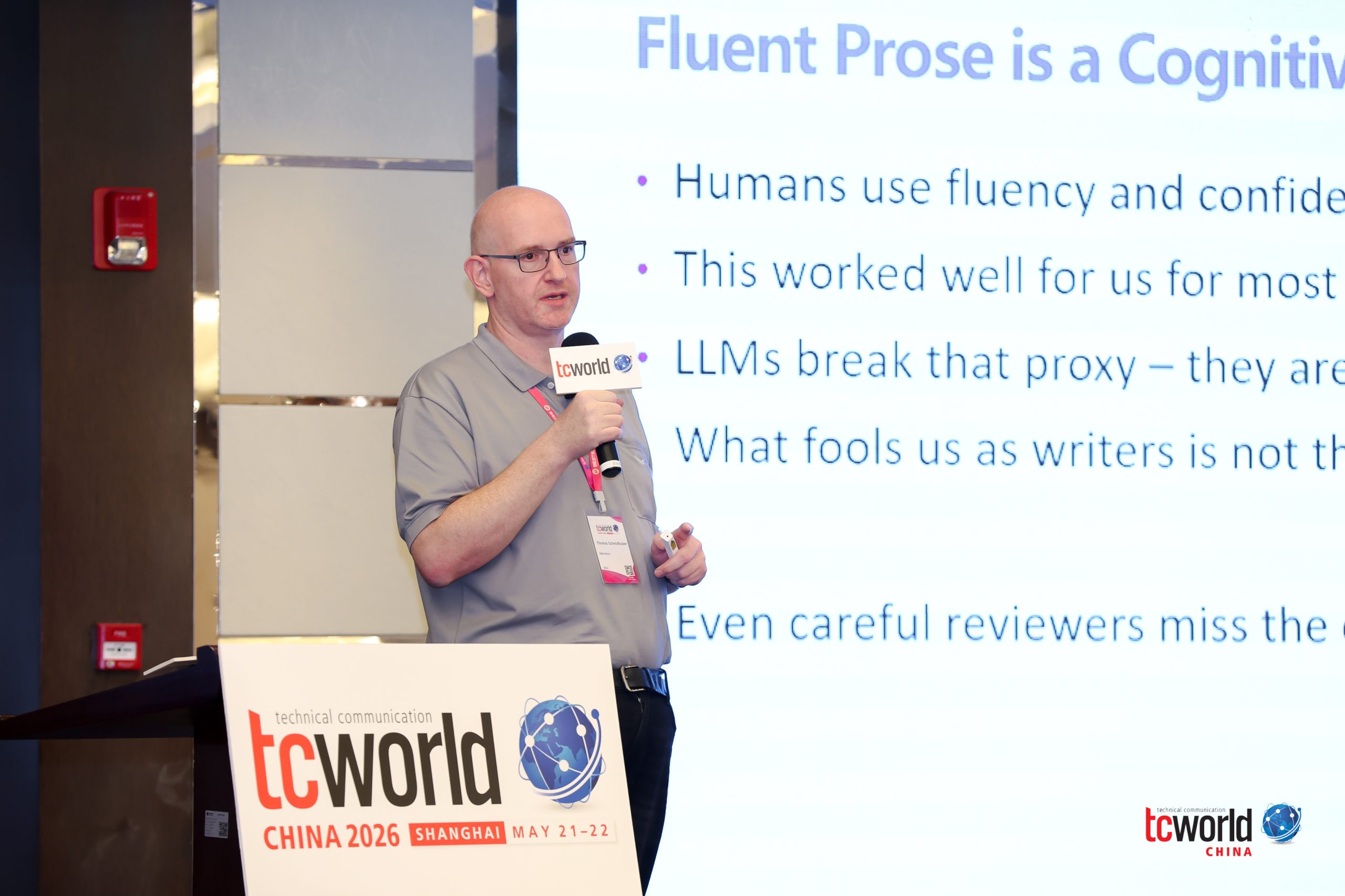
Thomas opened with a real-world cautionary tale: in October 2025, a global top-tier consulting firm submitted a AUD 440,000 report to an Australian government department—containing fabricated academic citations and court quotes. The report was reviewed by humans before submission. This is the real-world harm of the hallucination problem.
He categorized LLM hallucinations into six types:
Why do hallucinations occur? The explanation was clear: LLMs predict the “most probable” next token, and “most probable” is defined by training data, not by facts. The model is trained to guess confidently—in training, “I don’t know” scores 0, confident wrong answers score 0, and confident correct answers score 1. The mathematical expectation tells the model: when in doubt, always guess.
He outlined a minimal-hallucination workflow:
His conclusion: the verifier is the last line of defense—and that is your new role when working with LLMs.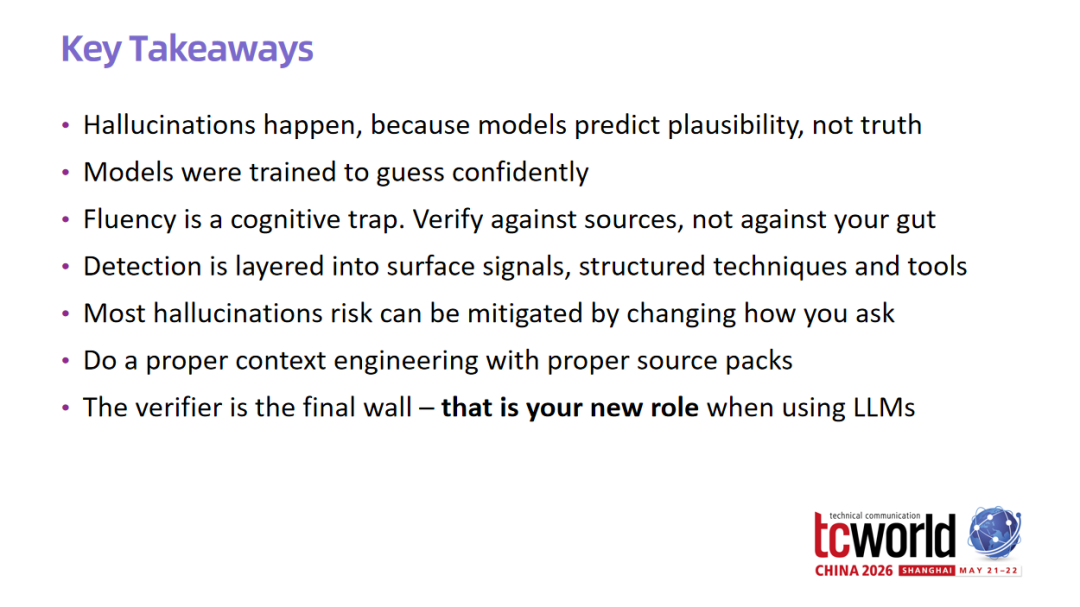
4. In the AI Era, True Scarcity Is Judgment
Speaker: Wang Xiaoli (Shanghai Changing Vision, Founder)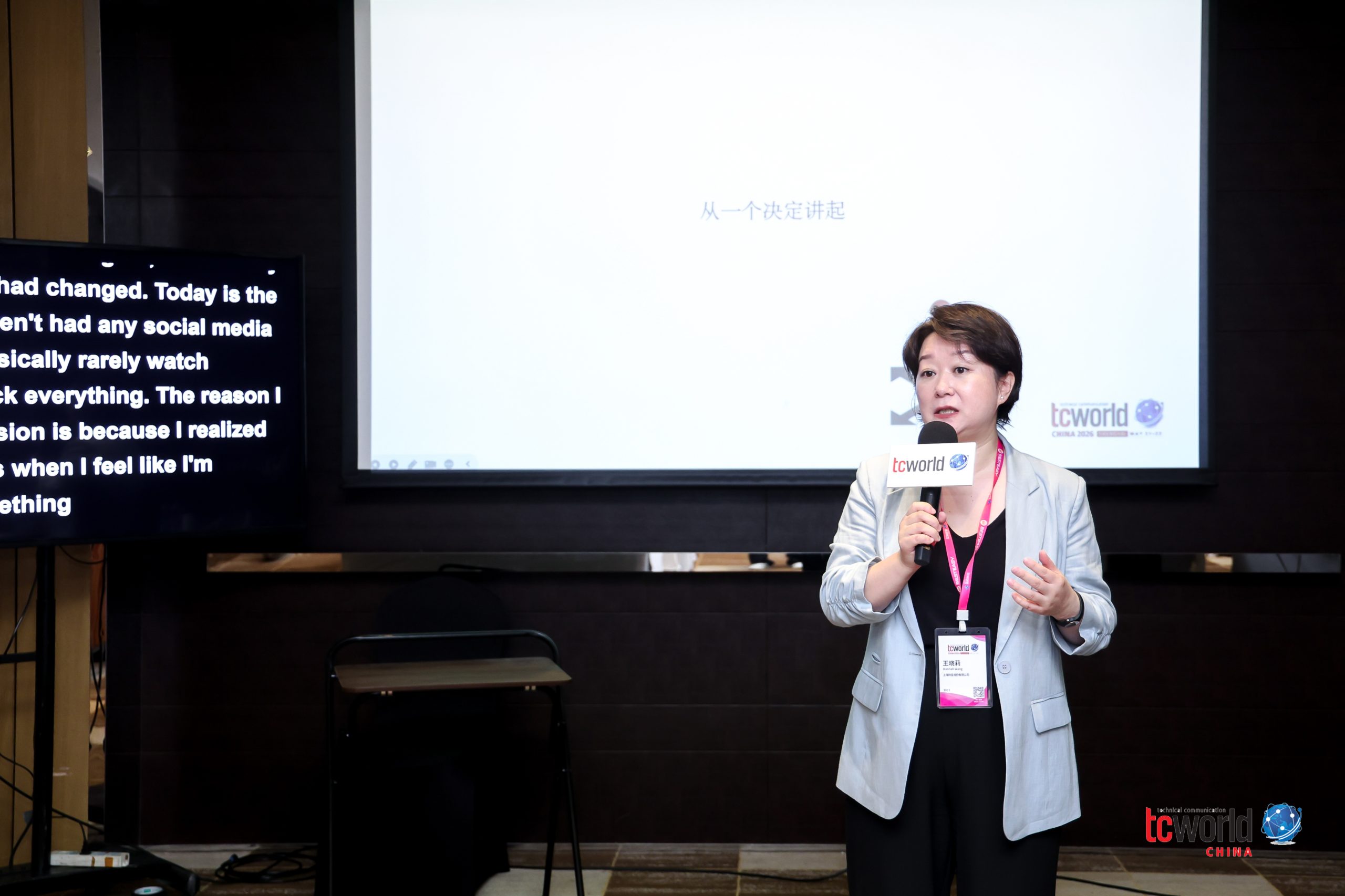
Wang Xiaoli opened with a counterintuitive proposition: “In the past, enterprises were bottlenecked by efficiency. Today, they are bottlenecked by decision-making. It’s not about doing things too slowly—it’s about finding it increasingly difficult to decide.”
She described three typical states of decision-making paralysis in the AI era:
The root cause: AI is taking over the work of “finding information, formulating options, and seeking answers,” handing the final decision-making responsibility back to humans. But people are still using old models to process new problems—thinking within AI-drawn frames about “which option is better,” rather than stepping outside the frame to address “why this option deserves to be chosen.”
She offered a practical 5% Decision Framework for any AI-related project that is stuck in deliberation:
The value of these three questions lies in forcing decision-makers to cut through the surface-level execution details and get straight to true priorities and accountability.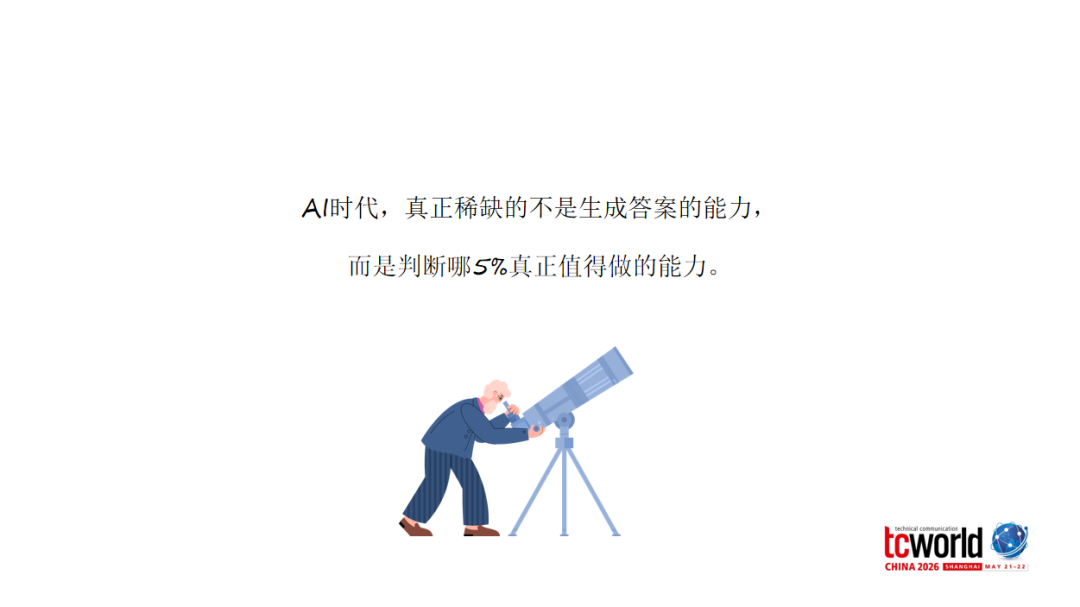
5. United Imaging Healthcare: A Three-Step Breakthrough from a Manual Team to a Digital-Intelligent Pioneer
Speakers: Wang Yuanyuan, Yan Heli (United Imaging Healthcare, Technical Content Development Department)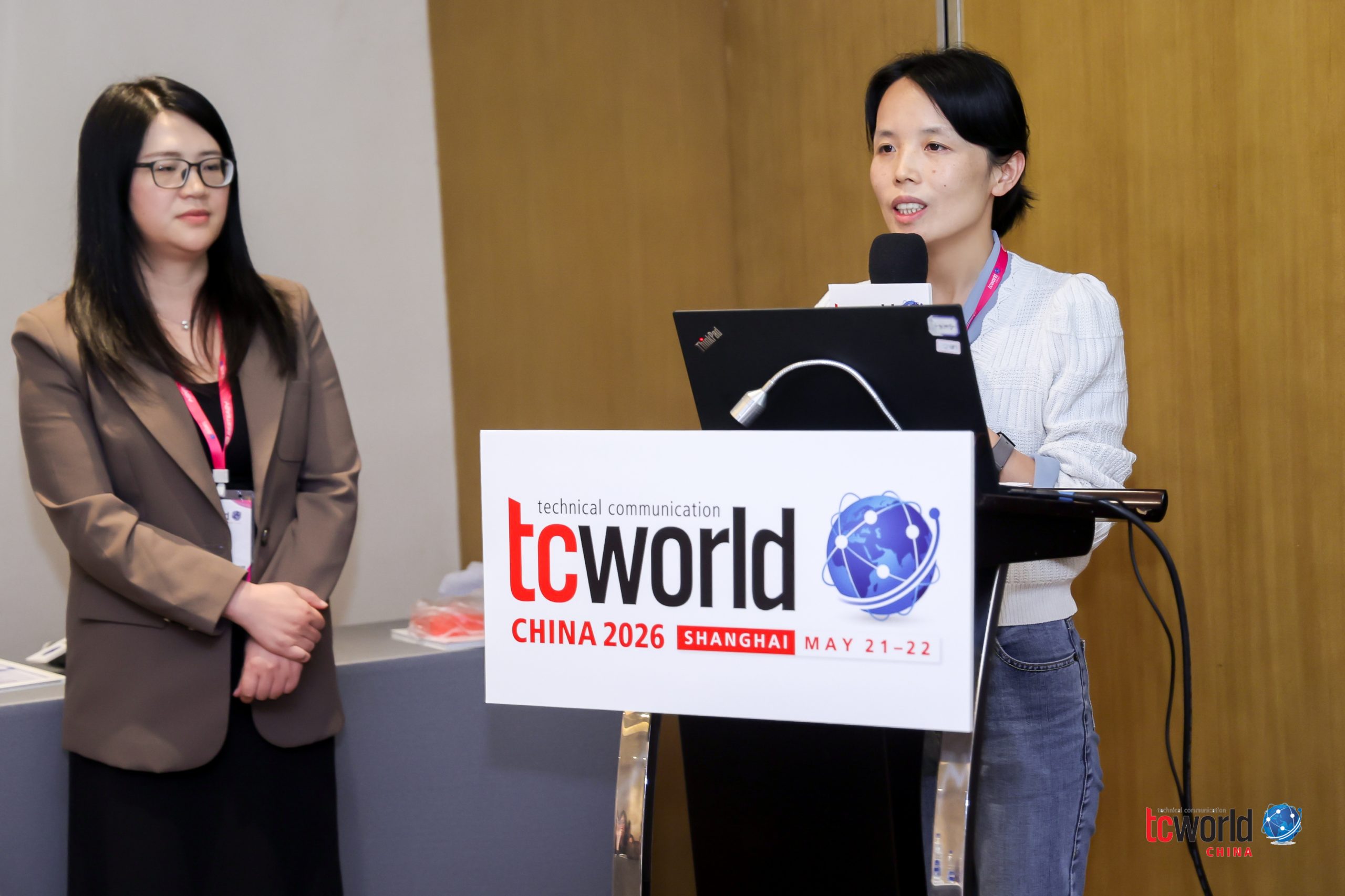
This was the most comprehensive organizational transformation narrative of the day—and the one closest to our own circumstances.
Step One: Role Evolution — From Translator to Localization Enabler.
The team initially focused on translation and manual writing. The first step in transformation was not introducing AI tools, but redefining the team’s value boundaries: establishing a knowledge asset aggregation system, building UI localization management infrastructure, and developing in-house AI translation tools to empower the entire team and boost efficiency.
Step Two: Content Evolution — From Static Manuals to Rich-Media Services. Deliverables expanded from text-based manuals to videos, interactive content, and other rich-media formats. More importantly, the team not only delivered content but also provided the tools to accelerate rich-media content production—a leap from “content supplier” to “content capability supplier.”
Step Three: Moving Toward AI-Native — Bottom-Up Construction of an AI-Driven Content Generation Pipeline. They used a vivid metaphor: moving from flashlight mode to ambient light mode. Flashlight mode is using AI tools to illuminate a specific dark corner; ambient light mode is AI becoming the foundational illumination of the entire working environment—ubiquitous, no need to switch it on.
Tangible results: writing tool plugins, cross-platform deep integration (automatically interfacing with authoring platforms, translation platforms, and Feishu), with efficiency gains of 90%.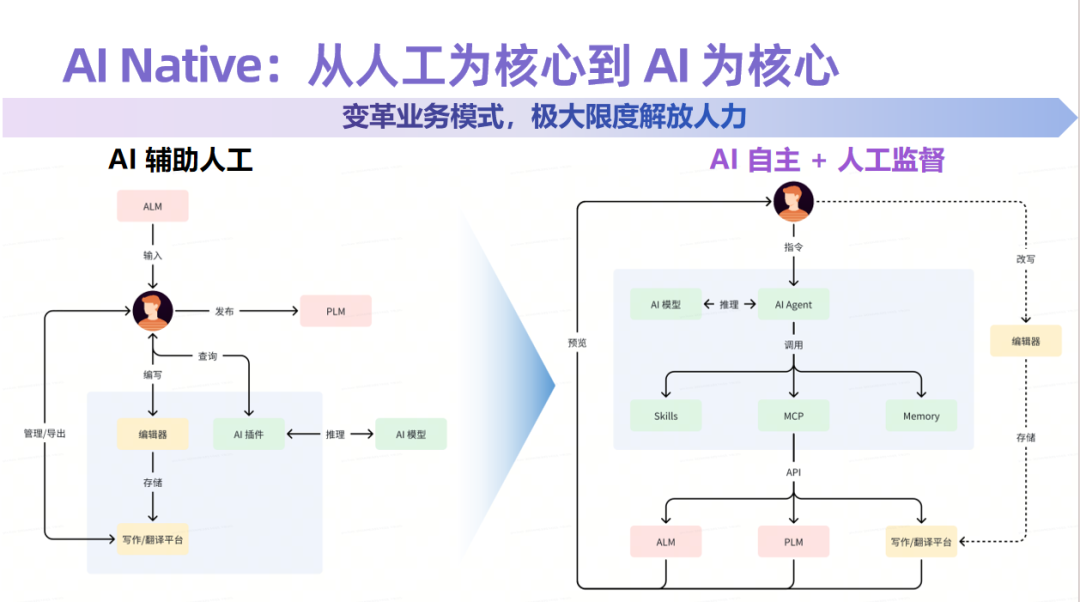
AI-native is not an end state—it is a direction. United Imaging’s three-step pathway offers a reference framework for evolution, with clear value delivery at each stage—no need to wait for “everything to be ready” to begin.
6. Bonus Session: Error Codes as Product Knowledge Assets
Speaker: Pan Ling (Shanghai Yunzhou Technology, Technical Documentation Manager)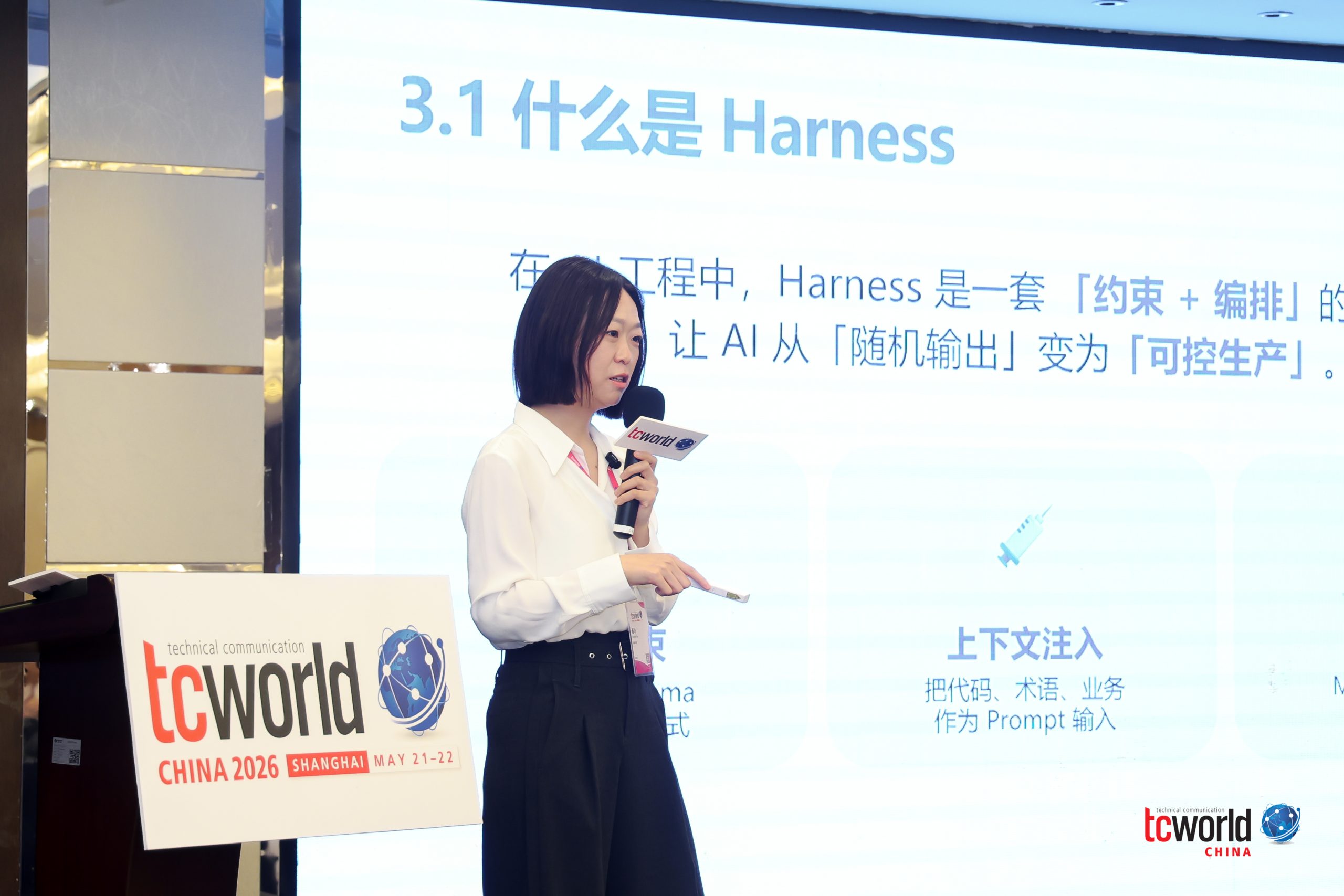
This topic seemed niche at first glance, but the thinking behind it is widely applicable.
Pan Ling’s core insight: when an operation fails, the first sentence the user sees determines whether they can self-resolve. But traditionally, error code content is haphazard—developer-written, user-obscure, multilingual inconsistencies, and quality depending on manual effort.
Her solution: building an AI-driven error code content production system using Harness Engineering, with a five-step automated workflow:
Multi-Agent orchestration: Generation Agent + Proofreading Agent + Translation Agent, coordinated by an Orchestrator, with traceable inputs and outputs at every node.
The result: moving from “developer hand-writing, human translation, Chinese-first-foreign-languages-lag” to “submitting one line of raw_message triggers full-chain automated generation and translation, with multilingual synchronized publication.”
Her concluding thought left a deep impression:
“Error codes should not be digital debris left behind when exceptions occur—they should be a precise cross-section of the product knowledge system.”
From “writing error codes” to “curating product knowledge”—this is the next step in documentation engineering.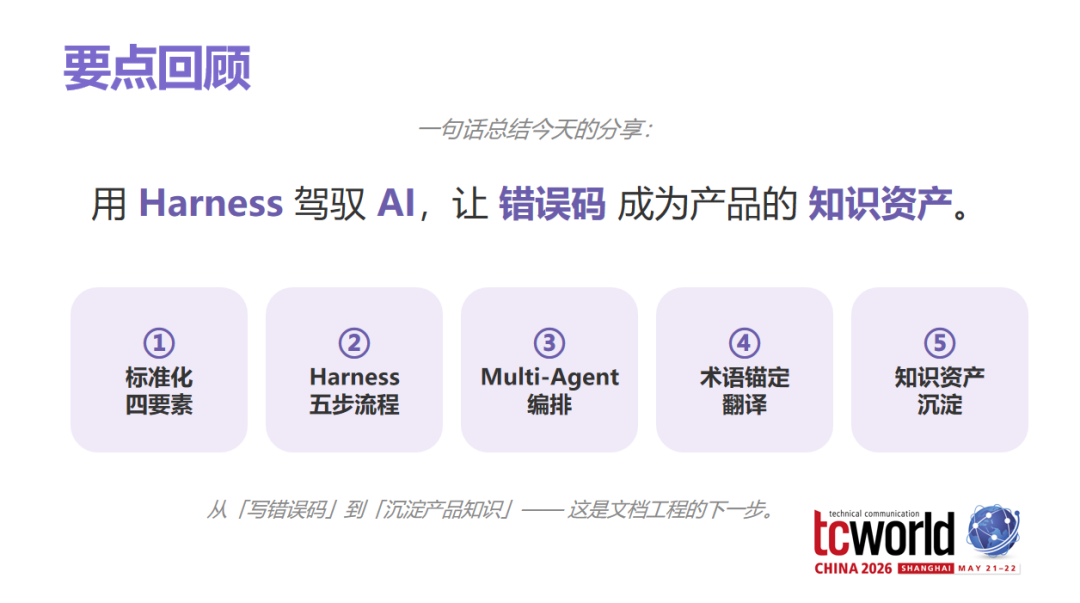
Day 2: Four Key Capabilities for AI-Native Technical Communication
Integrating Day 2’s insights, this correspondent distilled four core capabilities that need to be built:
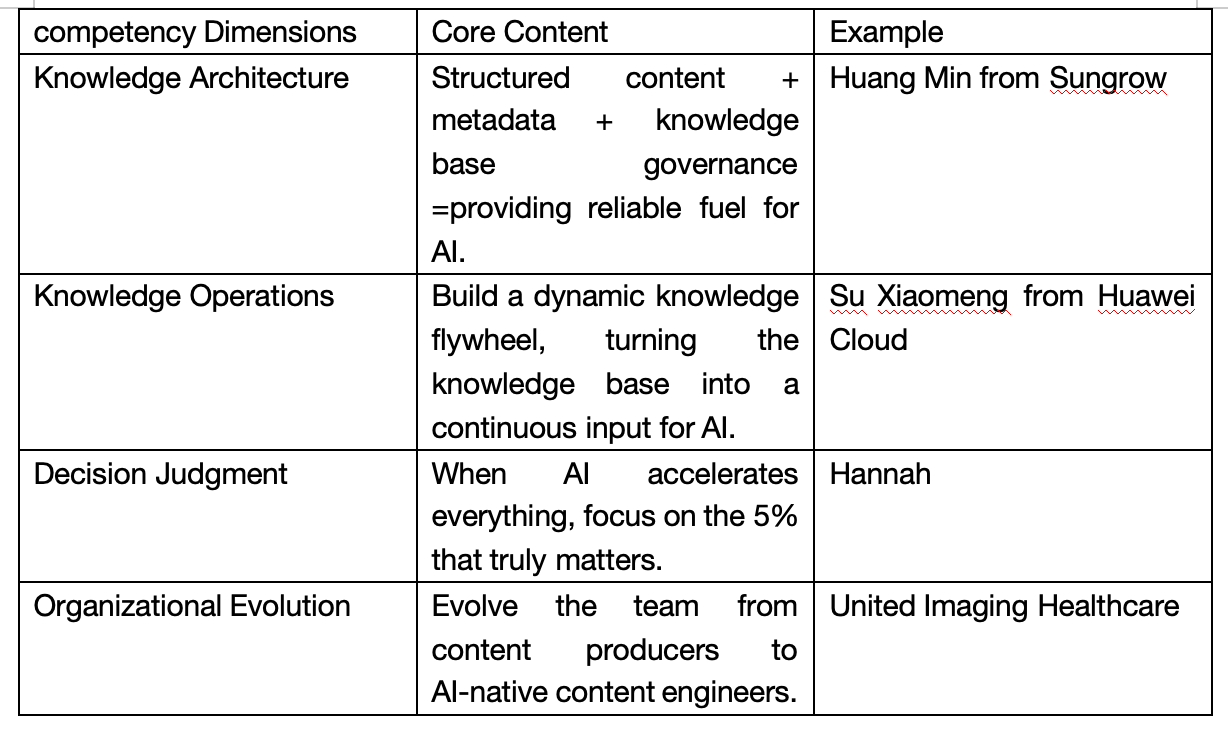
These four capabilities are not parallel—they are interdependent. Knowledge architecture is the foundation; without it, knowledge operations remain mere slogans. Decision judgment provides direction; without it, engineering investment loses its way. Organizational evolution is the converter; individual capabilities must pass through it to become systemic team competitiveness.
Where to Begin
More Highlights: Day 2 Program Review
Day 2 was equally dense with insights. For full details, please refer to the complete program.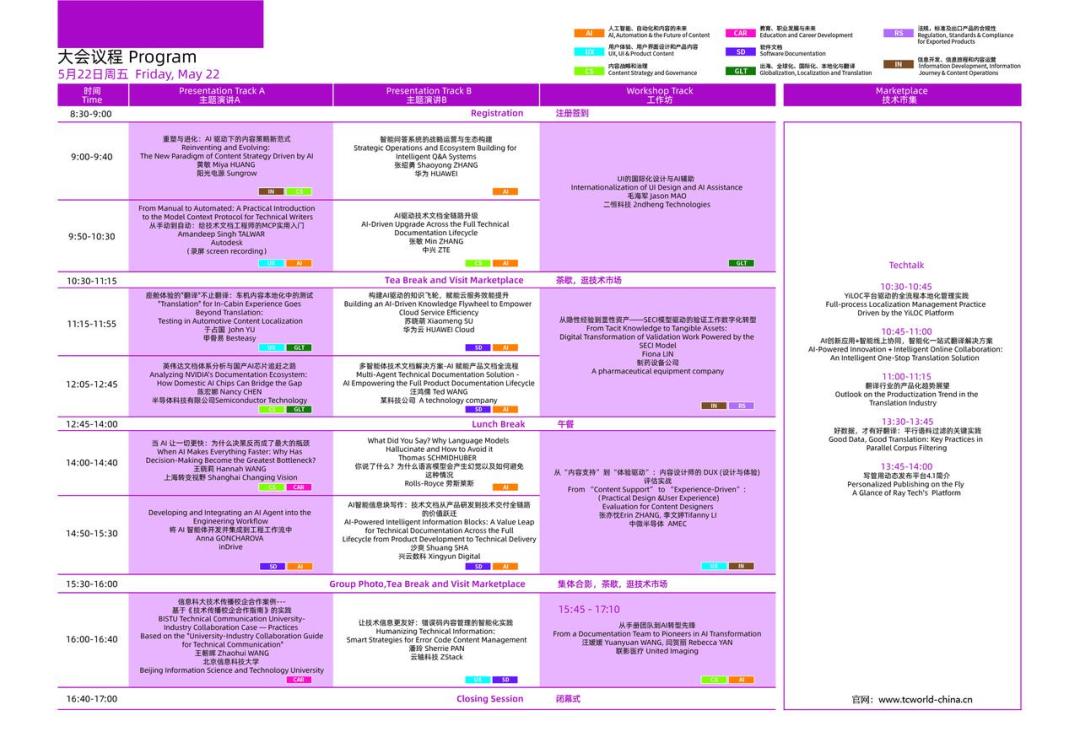
Closing Remark
“Flowers bloom alike each year, but the people who view them are ever-changing.” The AI wave has swept across every industry, bringing disruption and reshaping in its wake. Yet it is precisely amidst such change that our peers in technical communication have lit the path forward through dedication and innovation.
“Unite Minds, Navigate the New Landscape.” Over these two short days, we have exchanged ideas, confronted challenges with practice, and advanced from trend insights to case studies, from tool innovation to methodology upgrades. Every session, every exchange, has reinforced our conviction: the value of technical communication has never faded; the possibilities for our industry’s future are far greater than we can imagine.
Though the conference has drawn to a successful close, the conversations feel unfinished—the discussions left open, the inspirations newly sparked, the joy of reunion and the bonds of new acquaintance. All of these will become the momentum that carries us forward.
Our sincere gratitude to every participant for their wisdom and passion, and to every speaker for their honesty and insight. The road ahead is long, but we are fortunate to walk it together. May we carry the gains of these two days back to our respective domains—to cultivate deeply, break through boldly, and grow relentlessly.
The landscape is ever fresh; the future holds promise. We look forward to our next meeting, when we will once again chart new chapters in technical communication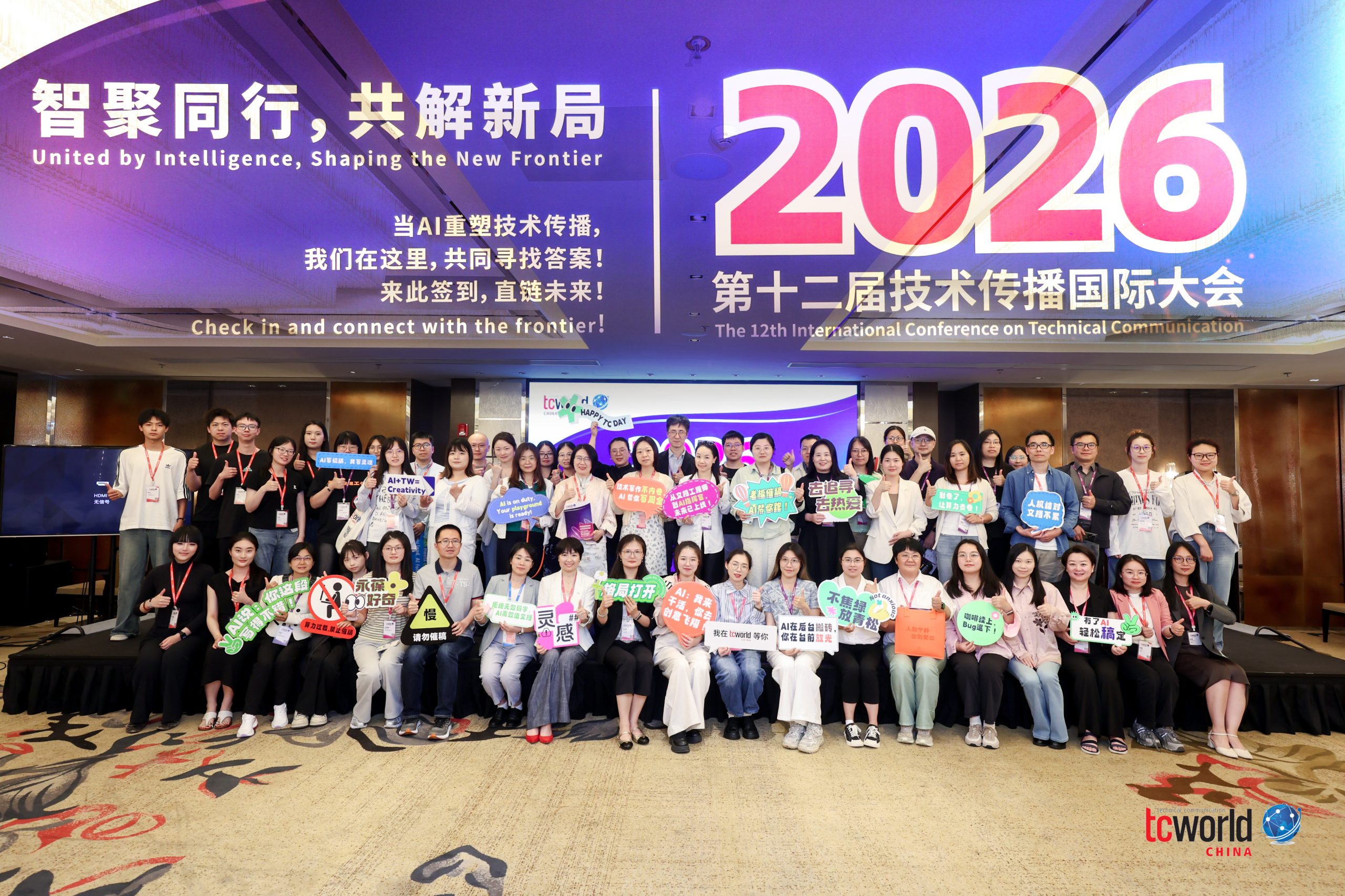
WeChat Official Account: